Beef shank, flank, oxtail, or Tái Lăn: Which will you choose?
Four cuts of beef on the phở menu, set side by side by tenderness, fat and when to eat them — enough to settle it before the staff reach the table.

The menu page opens to the phở section, with four items listed close together: bắp hoa, nạm gầu, đuôi bò, tái lăn. The guest scans them once, then reads them again more slowly. A staff member stands by the table, pen uncapped. That silence lasts about thirty seconds, and this article is written for exactly those thirty seconds.
Quick Answer: For your first time, choose bắp hoa — it's the neatest bowl, easy to eat with chopsticks and spoon from start to finish. If you want two types of meat in one bowl, go for nạm gầu. If you have time to linger and don't mind using your hands, đuôi bò is your choice. If you love the aroma of a hot pan and want a quick meal, tái lăn is perfect. Bắp hoa, nạm gầu, and tái lăn are all 80,000đ; đuôi bò is 100,000đ.
Four Names on One Menu Page
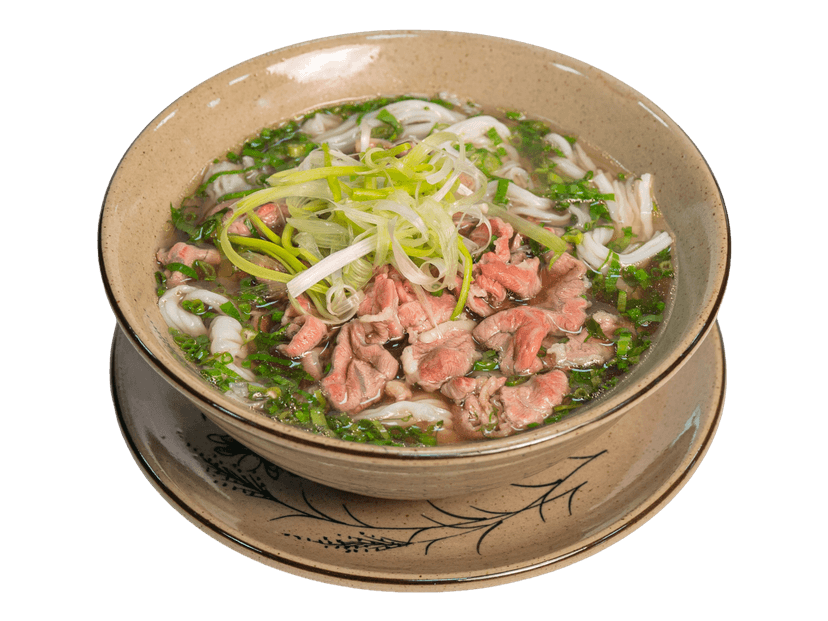
The most common confusion is that these four names aren't all of the same type. The first three refer to cuts of meat — bắp hoa, nạm with gầu, đuôi — while the fourth refers to a cooking method: tái lăn is meat quickly stir-fried in a very hot pan before being arranged in the bowl. This means when comparing these four items, you're comparing three different cuts of meat with one different technique, not four items within the same category.
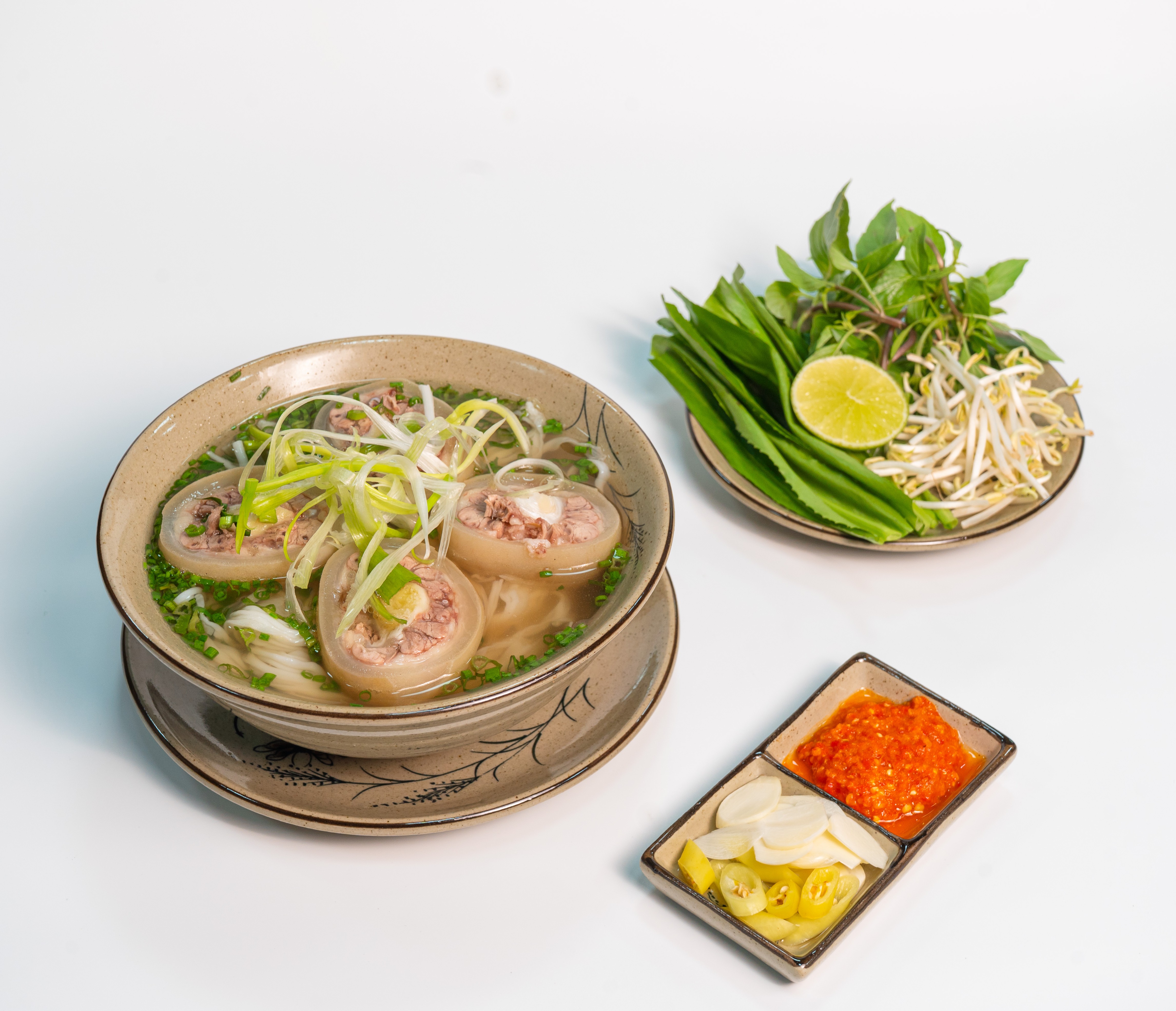
Bắp hoa is a thin slice of meat with a streak of tendon running through it. Nạm gầu combines two parts: nạm for a fibrous piece, and gầu for a tender, fatty piece. Đuôi bò isn't a slice of meat but rather bone sections with meat clinging to them, which you need to pick off to eat. Tái lăn meat looks similar to bắp hoa but carries an extra layer of aroma developed on the hot pan, something the other three bowls don't have.
The prices differ by just one tier: Phở Bò Bắp Hoa, Phở Bò Nạm Gầu, and Phở Bò Tái Lăn are all 80,000đ, while Phở Đuôi Bò is 100,000đ. This price difference reflects the cut of meat and cooking method, not a hierarchy — none of these four bowls is a simplified version of another.
Choosing Your Phở: Four Questions to Ask Yourself
The quickest way to decide isn't by reading each dish's description, but by answering four questions about yourself. Each question eliminates one or two options, and by the fourth question, you'll usually be left with just one.
- How much time do you have? If you need to eat and go, bắp hoa or tái lăn are ideal: the entire bowl is easily managed with chopsticks and a spoon, with no extra effort required. If you plan to sit and chat, đuôi bò is perfect — it requires you to pick meat off the bone and chew on the tendons, a process that can't be rushed. For more on why oxtail takes so long to cook, read the dedicated article on đuôi bò.
- What kind of texture are you craving? A single, consistent texture from start to finish: bắp hoa. Two alternating textures in one bowl: nạm gầu — the pair of nạm and gầu offers distinct lean and fatty profiles. An extra layer of aroma on the surface of the meat: tái lăn.
- Are you avoiding fatty foods? If so, cross off two options: nạm gầu and đuôi bò are the two bowls with the most noticeable fatty parts in this group. Bắp hoa is the leanest of the four, which is why it's often ordered for others when their preferences aren't clear. To learn about the tendon streak in bắp hoa, check out the article on bắp hoa.
- Do you have a preference for doneness? This question only changes the outcome for one specific item. For tái lăn, the level of doneness depends on the stir-frying time and slice thickness, so if you need it well-done — perhaps eating with children, during pregnancy, or simply prefer no pink meat — please inform the staff when ordering. The article on tái lăn explains the technique behind it.
Quick Choices for Your Table's Situation
Here are three common scenarios and their corresponding recommendations. Dining solo, first time: bắp hoa. It's the least demanding bowl and serves as a great benchmark for future visits. Dining as a pair, wanting to try more: order two different bowls and swap spoons halfway through your meal, rather than trying to find one bowl that suits both. Dining in a group with mixed eating paces: fast eaters can choose bắp hoa or tái lăn, while slower eaters can opt for đuôi bò — this way, everyone finishes around the same time.
There's one more scenario: you're torn between beef and chicken phở, not just among the four beef cuts. That's a completely different question, and the article comparing the two broths addresses exactly that. A list of available bowls on the 1st floor can be found in the Phố Cuốn menu.
FAQ
A Few Remaining Questions Before You Order
- If three bowls are the same price, how do they differ?
They differ in the cut of meat and what you need to do to eat it, not in quantity. Bắp hoa offers uniformly thin slices; nạm gầu provides two types of meat in one bowl; tái lăn adds an extra layer of aroma from the pan. Since they are the same price, there's no option to "pay more for better" — just three distinct experiences at the same price point.
- Can I order a bowl with a combination of two different meat cuts?
Each kitchen portions its dishes uniquely, and not all combinations are possible. This is a question better asked of the staff when you order, rather than something an article can answer for you. If a combination isn't possible, a simple alternative is for two people to order two different bowls and share, especially since three of the four bowls are at the same price point.
- If two people are dining together for the first time, what should they order?
A bắp hoa and a nạm gầu make for the most informative pair for a meal: one lean and neat bowl, and one with both fatty and lean parts. After that experience, you'll know which preference you lean towards, and your next choice will be between two branches rather than among four options.