Oxtail: A cut that rewards patience
Oxtail is full of sinew and collagen, so high heat only makes it tougher. It needs low heat and time, and the sign of doneness lies elsewhere.

The oxtail stew pot offers little to see. The lid is slightly ajar, a thin column of steam rises and dissipates, occasionally accompanied by a faint gurgle from the bottom. The cook checks in every forty minutes, opens the lid, skims off the golden fat accumulated at the edges, then replaces the lid. That's the entirety of the work for several hours.
Quick Answer: There's no universal cooking time for all oxtail pots — cuts vary in size, and regular pots differ from pressure cookers. What is universal is the sign: the meat separates from the bone with a gentle nudge of chopsticks, but doesn't fall apart on its own when lifted. The path to this sign is low heat plus time, and increasing the heat won't shorten it.
At what temperature does collagen turn into gelatin?
Oxtail is a structure composed of three layers: vertebrae, a ring of meat surrounding them, and between these, a thicker amount of connective tissue than most other parts of the cow. It is precisely this connective tissue – collagen – that makes oxtail both challenging and rewarding.
Collagen begins to contract and gradually break down into gelatin at temperatures above seventy degrees Celsius, but this is a slow reaction dependent on the product of heat and time. Cooking at higher temperatures doesn't significantly shorten the process, while it causes noticeable damage: muscle fibers contract strongly and squeeze water out of the meat. This is the familiar paradox of a rushed stew – the meat turns dry and tough, because the toughness isn't from the muscle fibers but from the tendons that haven't had time to transform.
One detail often overlooked: oxtail sections don't cook at the same rate. Sections from the base of the tail are larger, with more meat surrounding them, and a lower tendon-to-meat ratio. Sections towards the tip gradually become smaller, almost entirely bone and tendon. If you remove all sections at once, some will be falling apart while others are still tough. The solution is to remove them gradually in order, or accept that a few sections won't come away cleanly.
The released gelatin gives the broth body – a slightly sticky sensation on the lips, and a light thickness without needing flour. When cooled, the broth can solidify into a soft jelly. This is a completely natural phenomenon and proof that the pot has simmered long enough, not a sign of thickeners. Along with gelatin comes fat, and in oxtail, the amount of fat is quite substantial; skimming it off during cooking or letting it cool overnight and then removing the solidified layer from the surface are two common methods used in home kitchens.
One final technical point: many kitchens braise oxtail in a separate pot before combining it with clarified pho broth. The reason is very practical – the oxtail pot requires frequent stirring for skimming fat and gradual removal, and each stir causes sediment to be stirred up.
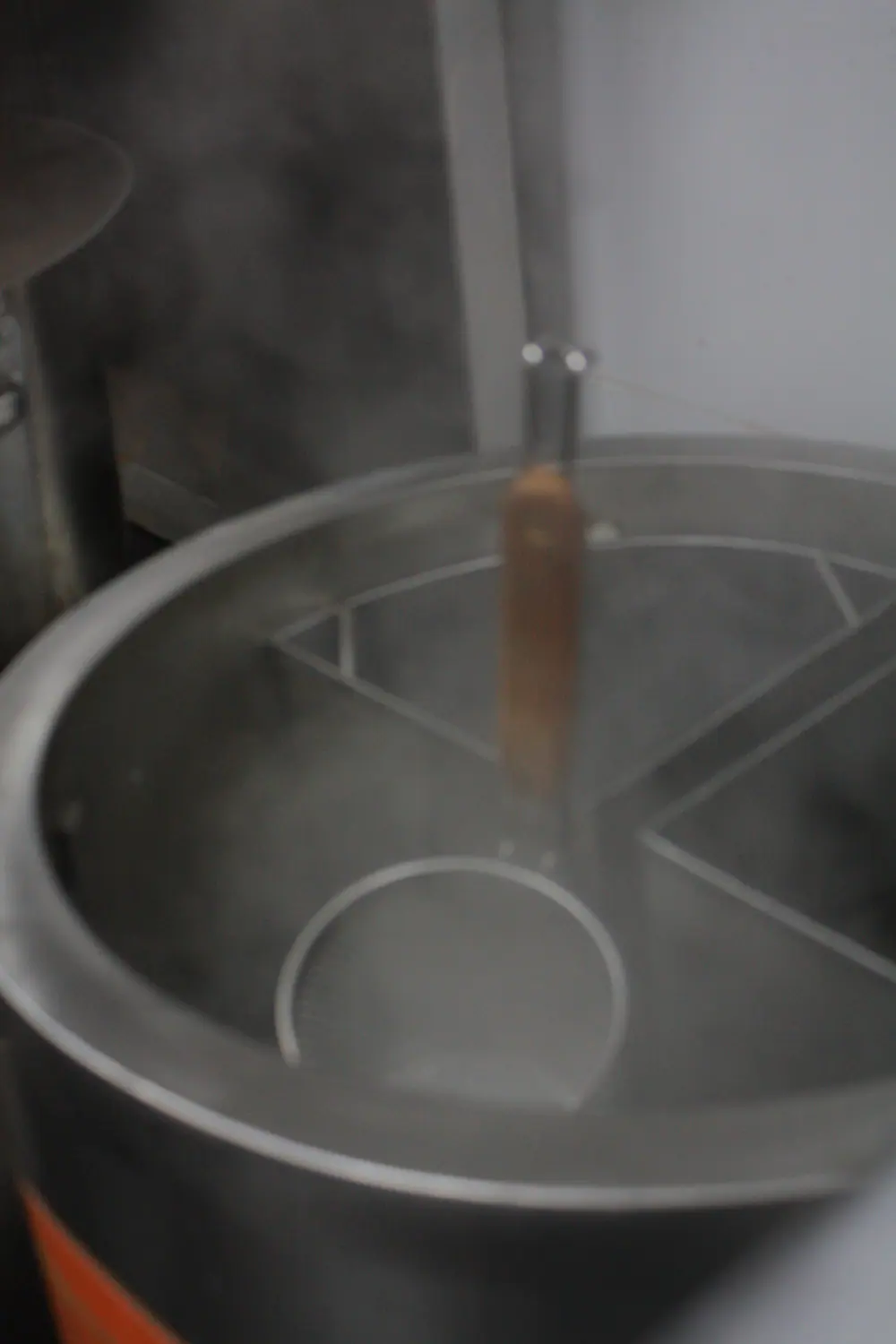
Braising one kilogram of oxtail in a home pot
This is a guide for a home pot, built upon the general principles of collagen; it is not the process used by Phố Cuốn kitchen, and the numbers below are a starting point for you to adjust according to your own pot.
Ingredients:
- 1 kg oxtail, cut into sections, choosing both base and tip sections
- 3 liters cold water
- 1 onion and 1 ginger knob, roasted until skin is charred
- Salt and fish sauce, seasoned at the final step
Steps:
- Blanch the oxtail in boiling water for seven to ten minutes, discard the water, and thoroughly rinse each section – the areas around the joints tend to accumulate the most impurities.
- Place in a pot with cold water, bring to a gentle simmer, then reduce heat until the water surface barely trembles.
- Simmer for three to four hours in a regular pot; open the lid every forty minutes to skim off fat.
- From the third hour, test with chopsticks: if the meat on a section gently separates from the bone, remove it; continue cooking the remaining sections.
- Add the roasted onion and ginger in the final hour, season last, strain the broth, then combine with the removed oxtail sections.
If using a pressure cooker, the time is significantly reduced, but you lose the ability to monitor and remove sections gradually. The way to compensate is to cook in batches: smaller sections cooked separately for a shorter time than larger sections.
A dish for those with time to linger
Oxtail pho is eaten at a different pace than other pho bowls. You don't just pick up a slice of meat and sip a spoonful of broth; you pick the meat off the bone, often needing both a spoon and your hands, and there are some tendons around the joints that require a bit of chewing. Therefore, it takes significantly more time, and can also be messier – the cold towel on the table will have a job to do.
In return, this bowl cools slower than any other, thanks to the thin layer of fat covering the surface and the amount of gelatin underneath. That's a real advantage when you're dining at leisure: the last spoonful of broth will still be warm. The size of the sections and the number of sections per serving are up to each kitchen and can vary daily, so if that's important to you, please ask the restaurant when ordering.
If you're considering different cuts of beef, beef shank and flank and brisket delve into each cut individually, while a comparison table of four cuts places them side-by-side based on key criteria. The Phố Cuốn restaurant page features photos of the ground floor space and the current menu.
FAQ
Frequently asked questions when ordering oxtail
- My oxtail pho broth thickens and gels when cooled, does it contain flour?
That's gelatin, and it's a good sign! Collagen from the connective tissues around the oxtail vertebrae breaks down during many hours of simmering, dissolving into the water when hot and solidifying into a soft jelly when cooled. A broth thickened with tapioca starch or cornstarch would be thick immediately when hot and have a cloudy, pasty consistency, quite different from the clear yet sticky feel of gelatin.
- My oxtail remains tough despite long simmering, what went wrong?
It's almost always about the heat, not the time. If the pot is boiling vigorously throughout, the muscle fibers contract and squeeze out all the water, while the collagen-to-gelatin conversion reaction still proceeds slowly – resulting in meat that is both dry and tough, even after four hours. Reducing the heat until the water surface barely trembles and accepting a longer wait is the only solution.
- Are the tendons around the joints edible?
Absolutely, and for many, it's the most prized part – when perfectly cooked, it's translucent, tender, and has a unique stickiness. Just be careful with small bone fragments that might break off while you're picking at it, and it's better to use a spoon rather than chopsticks for the meat closest to the bone.