Shrimp Fresh Spring Rolls: The translucent wrapper and the art of layering
Vermicelli at the bottom, herbs in the middle, shrimp near the outer edge to show through the rice paper. The layering decides whether the roll holds.

On the table, a freshly moistened rice paper wrapper, a handful of perfectly cooled vermicelli, a few torn lettuce leaves, and a row of halved shrimp, cut-side down. The person rolling doesn't look at the roll taking shape. They look at the empty space on the wrapper in front of them, because that's what determines how the roll will finish.
Quick Answer: Gỏi cuốn tôm (fresh shrimp spring rolls) are fresh, un-fried rolls: a rice paper wrapper encasing vermicelli, vegetables, and cooked shrimp. Whether the roll is tight or loose isn't determined by how firmly or gently you roll, but by the order in which the layers are placed on the wrapper. Vermicelli and vegetables go in first to form the core; the shrimp is placed last, on the outer layer, which is why it shows through the translucent wrapper.
Where Gỏi Cuốn Stands in the Vietnamese Roll Family
Vietnamese rolls are so numerous that no definitive list can encompass them all, but Gỏi Cuốn is often categorized as one of the most recognizable: the national tourism website Vietnam.travel describes it as the most familiar image when referring to Vietnamese rolls, typically filled with pork, shrimp, vermicelli, and vegetables, with many regional variations.
The word "gỏi" in the dish's name is more significant than its appearance. "Gỏi" refers to a family of fresh, uncooked salads, and the name foreshadows the nature of this roll: everything inside is already ready to eat before rolling. The person rolling doesn't cook anything — they merely arrange. That's why a failed Gỏi Cuốn usually fails in its composition, rarely in its taste. An entire floor of restaurants takes its name from this dish family, and the story behind the name Phố Cuốn explains why the word "cuốn" (roll) was chosen.
The naming also changes regionally, which often causes confusion when reading menus: in the North, "nem" is commonly used for both fresh and fried rolls, while in the South, "gỏi cuốn" almost exclusively refers to the fresh version. Therefore, when two people from different regions both say "nem cuốn," they might be envisioning two very different dishes. On a menu, what's more reliable than the name is the list of fillings — and if that line is too short, asking a question is always quicker than guessing.
Four Layers and Their Reverse Order
This is the least discussed yet most crucial part. Rolling is a circular motion, meaning everything you place down early will be pushed to the center, while what's placed down later will be on the outer layer. The diner sees from the outside in; the roller arranges from the inside out. These two directions are opposite, and the entire technique lies in holding both perspectives in your mind simultaneously.
The usable order, listed by placement:
- Large leaf at the very bottom, near the edge of the wrapper closest to you. It acts as a cushion: vermicelli and stiff vegetable stems will rest against it instead of directly against the moistened wrapper. This layer is almost the only thing standing between your roll and a tear.
- Vermicelli placed on top of the leaf, spread into an even, long strip, not piled up. This layer forms the shape: the diameter of the vermicelli strip is the diameter of the roll.
- Herbs scattered lengthwise along the vermicelli strip, not crosswise. If scattered crosswise, each bite will have a different flavor; if lengthwise, every slice will have a complete mix.
- Shrimp placed last, cut-side down, on the empty part of the wrapper in front — meaning the part that will close on the outer layer. Because it's on the outermost layer, only a thin wrapper covers it, and its orange color shows through clearly.
The common mistake isn't in any specific layer, but in the first roll. The first roll is the only one that needs to hug the core tightly; subsequent rolls merely repeat the diameter established by the first. If the first roll is slightly loose, there's no way to tighten it on the second pass — you're just wrapping more wrapper around a loose tube. And the two side flaps must be folded in before the wrapper is fully stretched: fold too late, and the edges won't press down, leading to filling poking out.
The core must also be even, not just tight. A clump of vermicelli in the middle creates a bulge; the rest of the roll automatically becomes hollow, because the wrapper can only stretch to the diameter of that bulge. A roll that fails this way still looks round on the outside, but only when you pick it up do you realize it sags at both ends.
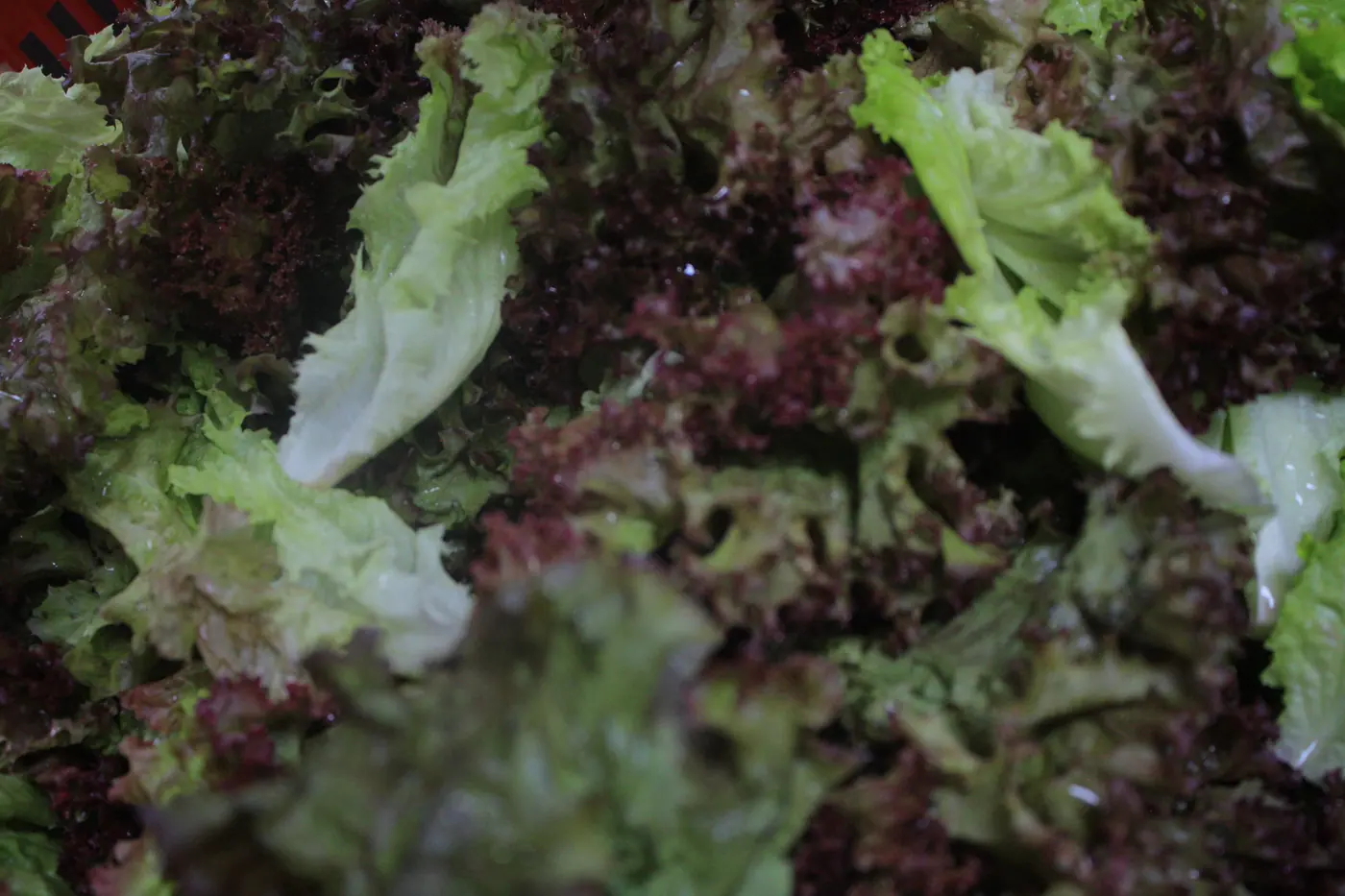
Two things beyond your hand's control still affect each roll. First is the pliability of the wrapper itself: it reacts to the room's atmosphere, not patiently waiting for you — if it's too stiff, it will crack at the fold; if too soft, it will stick to itself on the first pass. Second is water: wet vermicelli and undrained vegetables will make the inside of the wrapper even softer as you roll, making the tenth roll harder than the first if ingredients are left exposed for too long.
Try Rolling a Batch of Twelve
The following instructions account for extra rice paper wrappers, because anyone's first few rolls will likely unravel or tear — practicing is part of the process, not a sign you're doing it wrong. This is a starting point for a beginner, not the exact process used in the Phố Cuốn kitchen.
What you'll need:
- Medium shrimp, enough for each roll to have two halves side-by-side; boiled, quickly cooled, peeled, and halved lengthwise.
- Fresh vermicelli, separated and completely cooled.
- Lettuce or soft large leaves, herbs, blanched chives or green onions.
- Rice paper wrappers for fresh rolls, with a few extra sheets.
- Pre-mixed dipping sauce, set aside.
Steps:
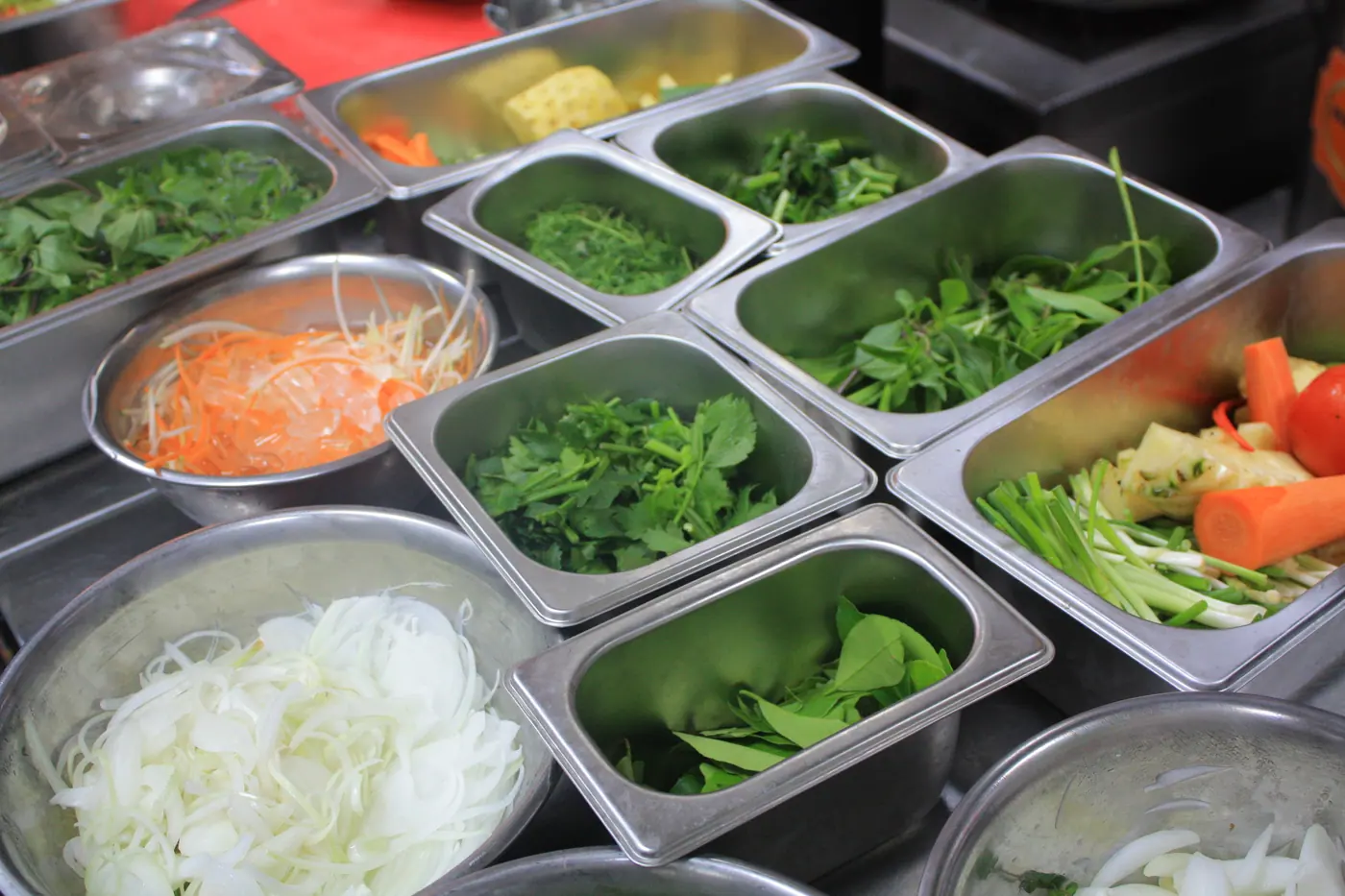
- Arrange everything in the exact order you will place it. This might sound redundant, but it's what keeps your rhythm steady — stopping midway to find a basket of vegetables gives the wrapper an extra ten seconds to become too soft.
- Halve the shrimp lengthwise instead of leaving them whole. A shrimp half has a flat side that lies flush against the wrapper, preventing it from bulging; a whole shrimp will roll and distort the final wrap.
- Moisten the wrapper, place it on a flat surface, and wait for it to become uniformly pliable before arranging anything on it.
- Arrange the leaf, vermicelli, herbs, make a very tight first roll, fold in the two side flaps, then place the shrimp on the empty part of the wrapper and finish rolling.
- Place the roll seam-side down. Its own weight will seal the seam while you roll the next one.
The Roll After It Leaves the Roller's Hands
Finishing the roll isn't the end. Arrange the rolls with space between them instead of crowding them: two moist wrapper surfaces touching will stick tightly, and when separated, the wrapper will tear exactly where they stuck. If you must stack them, place a layer of leaves between the two tiers.
To cut or not to cut is a real decision, not just about presentation. Cutting diagonally reveals the cross-section and shows the inner layers, but it also allows the filling to spill out if the core isn't tight enough — so a roll that can be cut is a well-rolled one; cutting won't save a loose roll. With an uncut roll, the seam underneath keeps everything in place until the last bite.
Finally, the dipping sauce. The roll has bland vermicelli, a bland wrapper, and unsalted vegetables, intentionally leaving a flavor gap, and the dipping sauce is created to fill that exact space. Which sauce goes with which dish is chosen by the kitchen according to the dish; there's no fixed pairing. As for how many portions to order and when during the meal, asking the staff when ordering is always quicker than guessing. This roll is located on the 1st floor of a building with four kitchens, and four flavors in one address tells what the other three floors cook. A list of the rolls currently available on the 1st floor can be found in the Phố Cuốn menu.
FAQ
Common Mistakes When Rolling Your Own
- Why doesn't the shrimp in my homemade roll show its color as clearly as in restaurants?
Almost always because the shrimp was placed too early, so it's mixed in the middle and covered by vermicelli. Shrimp should be the last thing placed, on the empty part of the wrapper, so only a single layer of wrapper covers it. The second factor is the cut side: a shrimp half placed cut-side down will have its curved, darker back facing outwards, while if placed face-up, the white flesh will show.
- How tight should the roll be?
An easy benchmark is to hold the roll horizontally between two fingers: it shouldn't sag at the ends, nor should it be so taut that the wrapper becomes completely transparent and noticeably thin. Too tight, and the wrapper will crack along its body as the vermicelli absorbs a little more water; too loose, and the filling will shift to one side as soon as you take the first bite.
- When should I cut the roll in half?
Cut right before eating, don't pre-cut the entire batch. The cut surface is the only place the filling is directly exposed to air, so a cut roll dries out much faster than a whole one. If you must pre-cut for display, use a thin knife and make a decisive single cut: sawing back and forth will cause the wrapper to bunch up and pull the filling out with the blade.