Your First Pho Experience: Ordering & Customizing
Which cut to order, what to add, when to squeeze the lime, whether to taste the broth first — a few short notes for a first bowl of phở.

On a Vietnamese phở table, there's usually a small tray in the middle: a jar of pickled fresh chili, a jar of chili sauce, a pepper shaker, and a plate of sliced limes. The guest looks at the tray, then at the bowl that's just been served, then at the tray again. There are no instructions, and this is exactly where most first-timers feel a bit lost.
Quick Answer: Order in three steps: choose your bowl, state any special requests immediately, then consider extra items. When your bowl arrives, taste a spoonful of broth first, then add lime, chili, and herbs little by little. The reason is very practical: you can always add more, but you can't take it out.
Three Things to Tell Your Server Before Your Bowl is Prepared
First, choose your bowl. Beef or chicken first – two broths for two distinct flavors, and you just need to lean towards one. If you choose beef, there's another branch: the cut of meat, and a comparison table of four cuts lays them out by decision criteria. If you don't understand a name on the menu, feel free to ask your server to describe the cut – this is a normal question, not a silly one.
Second, state any special requests, and do it now, not after the bowl has arrived. Whether you want your meat well-done, can't eat onions, prefer less salt, or no herbs – these are all things the kitchen can handle if they know beforehand, and are almost impossible to fix once the bowl is served. For allergies, there's a strict rule: don't assume based on the dish name. A name doesn't tell you what's in the bowl, so if you're allergic to anything, please state it clearly and ask the restaurant, even if you think the dish definitely doesn't contain it.
Third, extra items. On the ground floor menu, Phở Bò Bắp Hoa and Phở Gà are both 80,000đ, while an extra free-range egg is 20,000đ. If you plan to order an extra dish for the whole table, always ask about the portion size – how many pieces, how many people it serves – instead of guessing by the name and ordering too much.
What's on the Table and How to Approach It
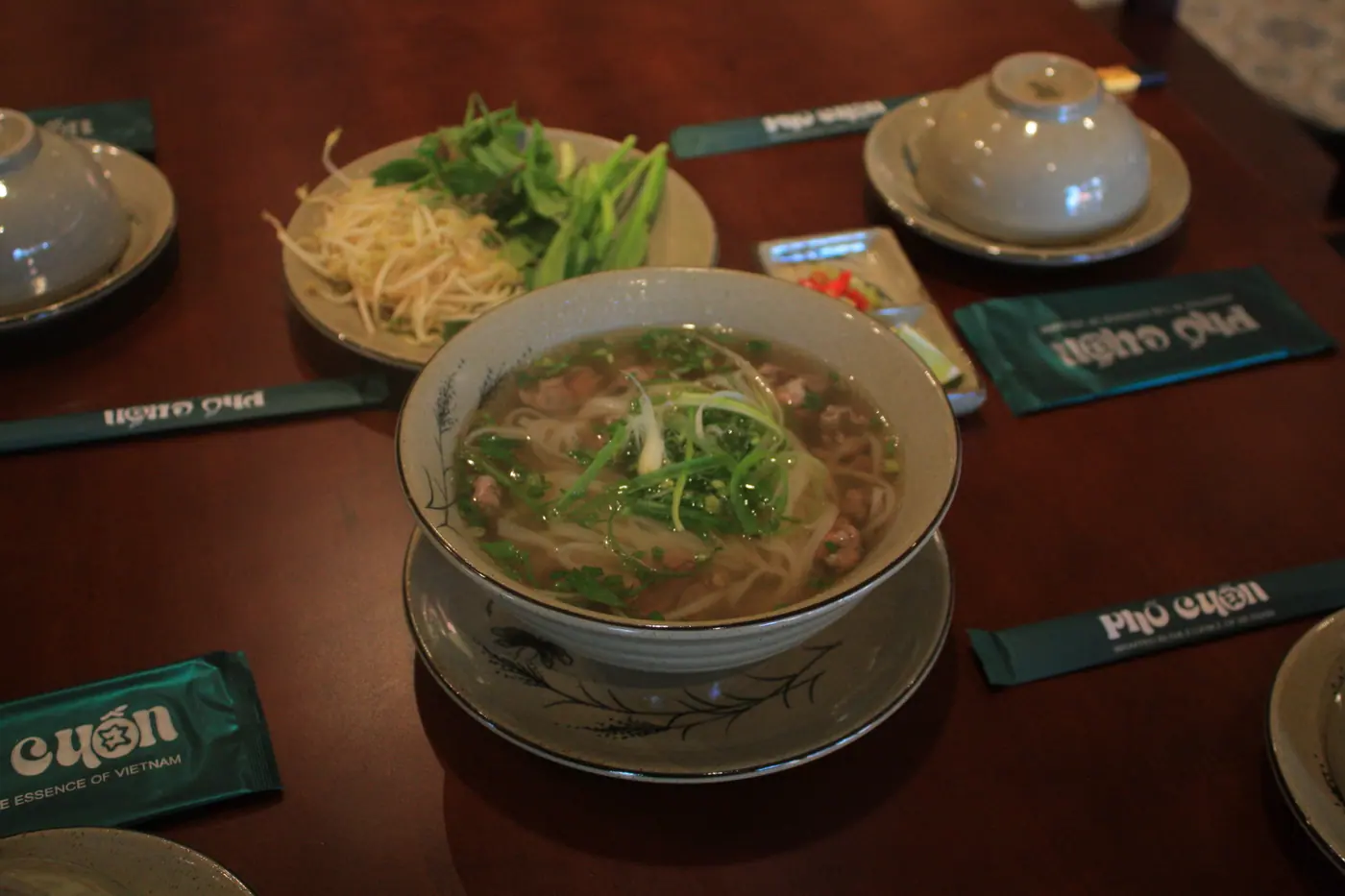
The first thing to do when your bowl is served is to scoop a spoonful of broth and taste it as is. This isn't a ritual, nor is it for you to grade the kitchen – it's simply a way to set a baseline for yourself. After adding lime, your bowl becomes a different bowl, and you can't go back to know how much you've changed it.
After the first spoonful, the logical order is as follows:
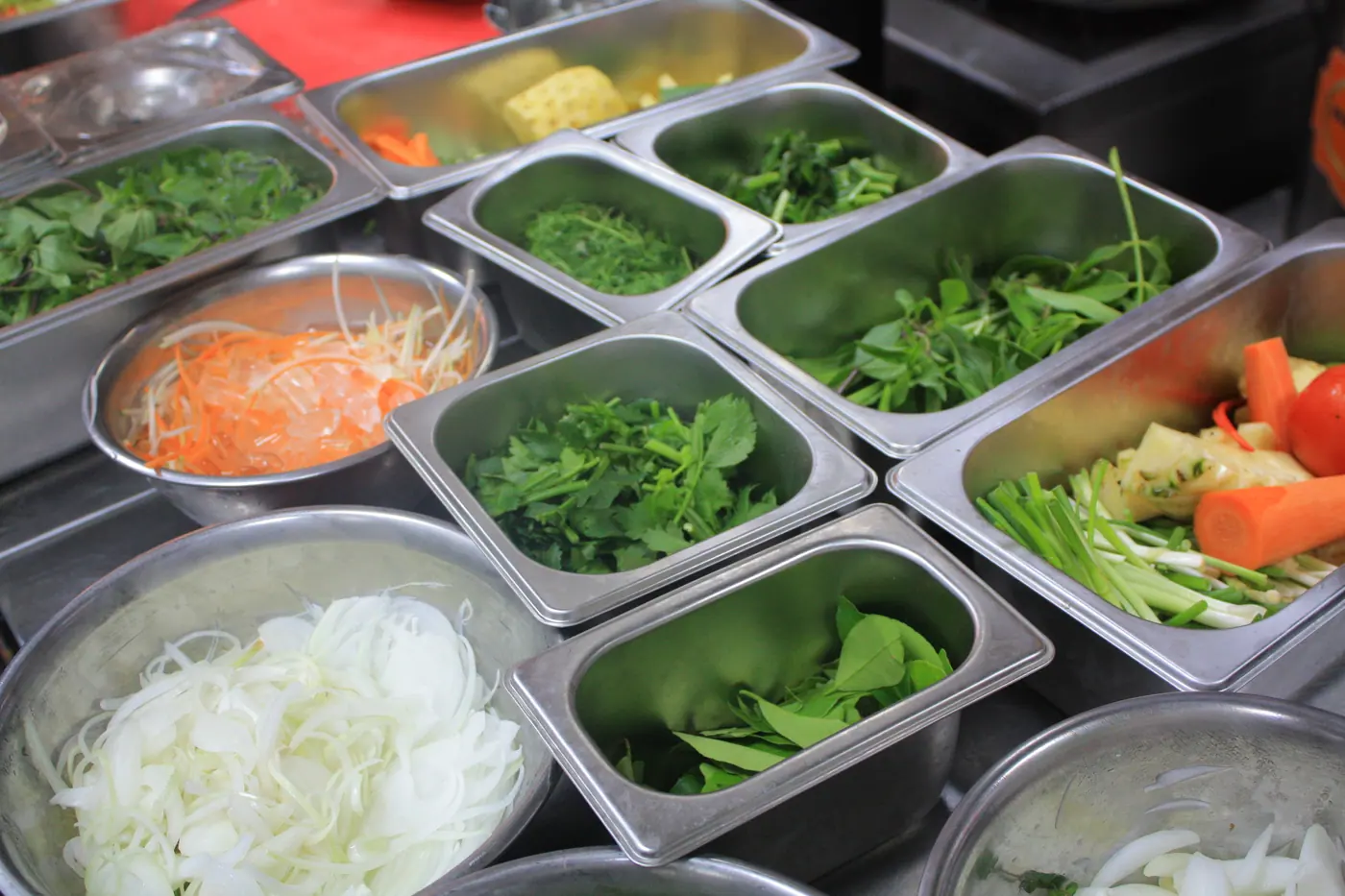
- Herbs and bean sprouts if served on a separate plate. Add small handfuls and push them under the broth to wilt; don't dump the entire plate in – the greens take up space and cool the bowl down quickly.
- Lime. Squeeze half a wedge, stir gently, taste again, and then decide if you want to squeeze more. Lime is the ingredient on the tray that changes the bowl's flavor most powerfully.
- Chili. Pickled fresh chili offers a clean heat and a slight sourness; chili sauce is sweeter and makes the broth cloudy. If you're unsure of your spice tolerance, place a slice or two on your spoon and taste it before adding it to your bowl.
- Pepper. Sprinkle last and sparingly, as pepper floats on the surface of the broth rather than dissolving.
There's a regional difference worth knowing before you find it unusual: the custom of adding hoisin sauce and chili sauce to the bowl is common in the South, while many in the North prefer to keep their bowl as is, only using a little garlic vinegar or fresh chili. There's no wrong way here – knowing this simply prevents you from thinking you're doing something differently from everyone else.
The Rhythm of Eating for First-Timers with a Bowl of Phở
Chopsticks and spoon are used simultaneously, one in each hand: chopsticks for noodles and meat, the spoon for broth. Experienced eaters often pick up a mouthful of noodles, then sip a spoonful of broth, maintaining that rhythm throughout the bowl. No one expects you to slurp directly from the bowl, though many still do so for the last spoonful.
Here's a practical detail: the noodles won't wait for you. They are the fastest-changing element in the bowl, so if you plan to eat and chat for a long time, eat the noodles first and save the broth and meat for later.
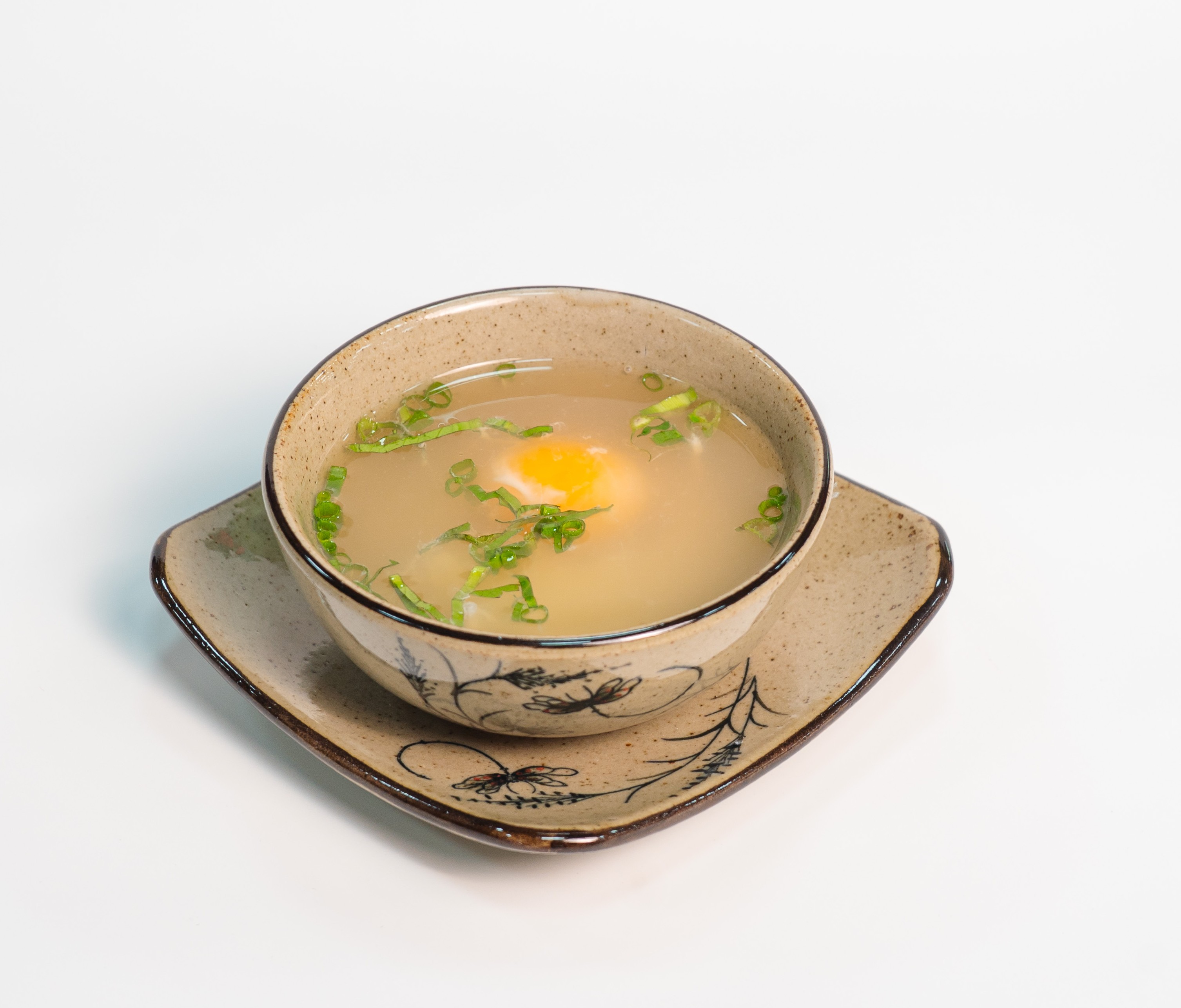
If you order an extra egg, state your preferred doneness right when you order. A poached egg with a runny yolk is not fully cooked, and certain groups should choose a well-done egg – a dedicated article on poached eggs explains who and why. And if you want to know how a bowl of phở unfolds for the diner, from the first waft of steam to the last spoonful of broth, then the article on the rhythm of a phở bowl follows that exact path. The ground floor space and current menu can be found on the Phố Cuốn restaurant page.
FAQ
Common Questions for Your First Phở Order
- Squeezed a whole lime into the bowl – can it still be saved?
Partially, yes, and the only way is to dilute it: ask for a little more hot broth. Sugar or MSG won't counteract the sourness; they'll just add another layer. This is also why it's recommended to squeeze half a wedge and taste – lime is the most one-way ingredient on the condiment tray.
- If herbs and bean sprouts are on a separate plate, should I put them all in the bowl or eat them on the side?
Both methods work and yield two different results. Dropping them into the bowl wilts the greens, making them soft and infusing their aroma into the broth; eating them on the side keeps them crisp and fresh. If you're unsure which you prefer, add half to your bowl and keep the other half on the plate to compare during the same meal.
- How to neatly hold chopsticks and a spoon at the same time?
Chopsticks in your dominant hand, spoon in the other, and the spoon should always remain in the bowl, not placed on the table mid-meal. When picking up a mouthful of noodles, use the spoon underneath to catch any drips, preventing broth from spilling onto the table – that's the spoon's main purpose while you're scooping. If you find it awkward, a simpler method is to alternate: a few bites of noodles, then set down your chopsticks and sip a few spoonfuls of broth.