Flank and Brisket: two textures, one rich broth
Nạm is the fibrous lean from the rib; gầu the crisp fat from the brisket. The two sit side by side in one bowl and feel nothing alike.

On the cutting board lay two pieces of meat, just retrieved from the same pot, placed side by side. The piece on the left was dark red, with long fibers running in one direction, occasionally interspersed with thin, silvery membranes. The piece on the right was lighter in color, and when cut crosswise, revealed layers of fat and lean meat, resembling stone veins. They went into the pot at the same time, but the piece on the left had been taken out half an hour earlier.
Quick Answer: Flank (Nạm) is a fibrous cut of meat from the belly and rib area, primarily lean, with thin, sinewy membranes between the muscle fibers. Brisket point (Gầu) is a cut from the brisket, where fat and lean meat are clearly layered, giving it a tender, rich, and buttery feel when hot, rather than distinct fibers. These two cuts cook at different rates and need to be removed from the pot at different times, even if they are cooked together.
Two Cuts of Beef, Two Locations on the Cow
Flank (Nạm) is located in the belly and rib area. This muscle group endures pulling forces in one direction, so its fibers are long, run parallel, and are easily visible to the eye. Interspersed between these muscle bundles are thin, paper-like membranes. Slow cooking at low temperatures softens these membranes, making them translucent, while the muscle fibers retain their shape — this is precisely the texture flank lovers seek: a fibrous bite, giving your teeth something to work on.
Brisket point (Gầu) is a cut from the brisket, located at the front of the chest. Its characteristic feature is that the fat doesn't form a separate layer but is marbled within the lean meat in distinct layers. The fat in this area is denser than leaf fat and requires sufficient heat and time to transform from a waxy state to a translucent one. Before reaching that threshold, the brisket point can feel greasy and waxy in the mouth. If cooked too far beyond that point, the fat layers disintegrate, and the meat loses its structure, leaving only dry lean meat.
Within the culinary world, there's also a distinction between 'gầu giòn' (crispy brisket point) and 'gầu bùi' (buttery brisket point). This terminology varies by region and butcher, but most vendors use it to refer to two different locations within the same brisket cut, rather than two cooking methods. The part closer to the sternum has a higher proportion of tendons and connective tissue, giving it a slightly chewy, 'sần sật' texture when cooked — this is called 'gầu giòn'. The inner part, with more marbling, is softer and richer — this is 'gầu bùi'. Both parts belong to the same cut and are called 'gầu', so if you have a distinct preference, it's better to mention it to your butcher or ask when ordering, rather than inferring it from the name alone.
Both cuts must be allowed to cool completely before slicing, for the same reasons mentioned in the article about beef shank. However, brisket point (gầu) has an additional specific requirement — the knife must cut across the layers, so that each slice contains both fat and lean meat. Slicing along the layers would result in some slices being all fat and others all lean, and neither is what people expect when ordering brisket point.
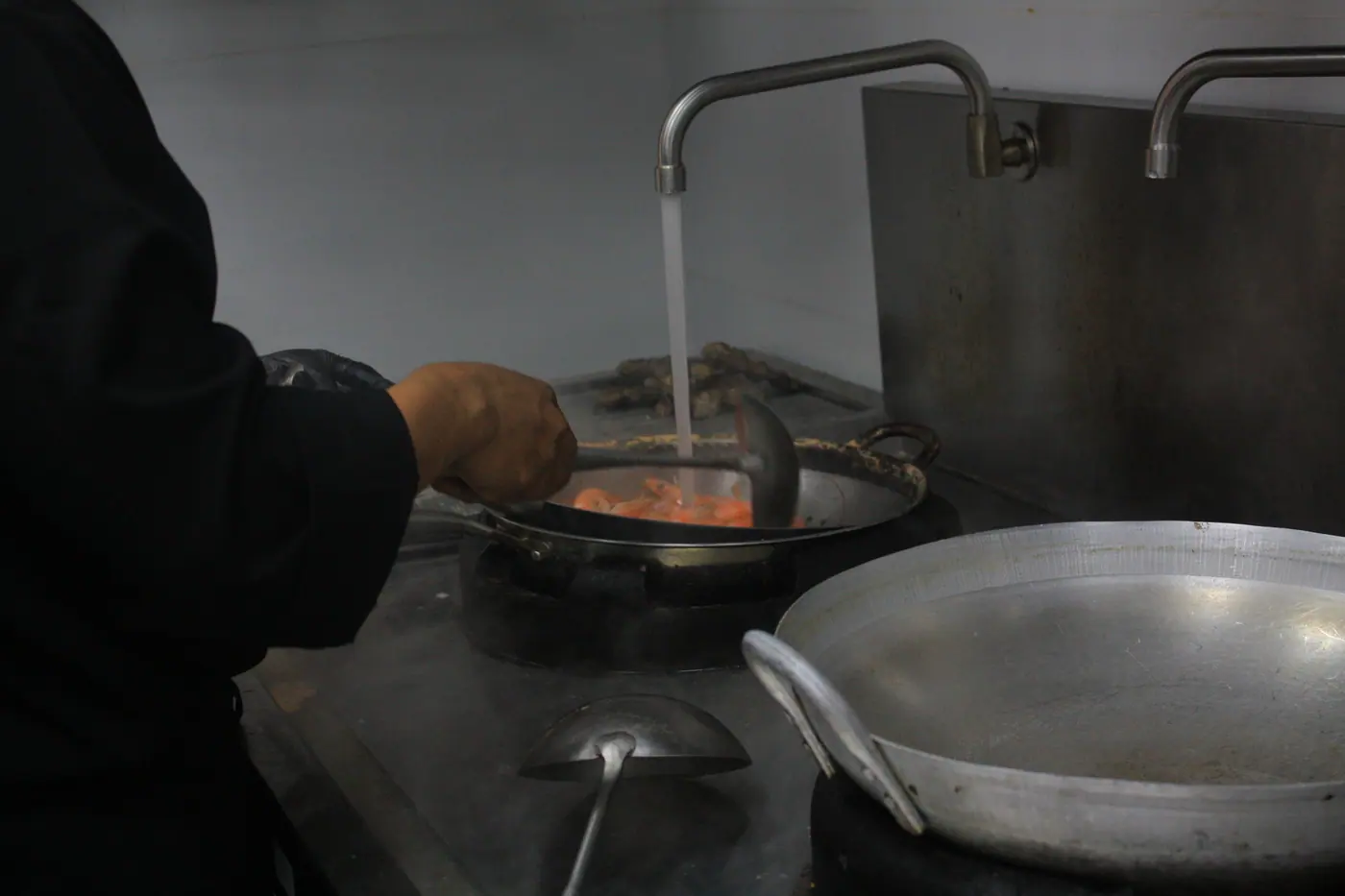
Side by Side: Lean, Fat, and How These Two Cuts Meet Hot Water
- Visual Appearance. Flank (Nạm) has long, parallel fibers, a fairly uniform dark red color, and thin, visible sinewy membranes. Brisket point (Gầu) has distinct layered marbling, with ivory-white fat interspersed with lean meat; the cross-section resembles stone veins more than muscle fibers.
- Mouthfeel. Flank (Nạm) offers a fibrous, firm yet tender sensation, requiring a few chews. Brisket point (Gầu) melts more quickly, coating the palate with richness, and has almost no fibrous feel.
- When Hot Broth is Poured Over. The fat layers of the brisket point (Gầu) immediately become translucent and glossy; this is the moment the brisket point is at its peak. Flank (Nạm) changes less, only warming up and softening slightly.
- As the Bowl Cools. Brisket point (Gầu) is the most affected: as the fat congeals, the waxy sensation returns. Flank (Nạm) largely retains its texture until the last spoonful.
- Cooking Time. Flank (Nạm) typically cooks faster and needs to be removed earlier; brisket point (Gầu) requires more time for its fat layers to fully render. This is why the two cuts are never removed from the pot at the same time.
This last point is often where things can go wrong in practice. If both are removed from the pot at the same time, either the flank (Nạm) will be overcooked to a fibrous state, or the brisket point (Gầu) will be undercooked and greasy. There's no universal cooking time, as the size of the cut and fat ratio vary each time — the signs still need to be read with a skewer.
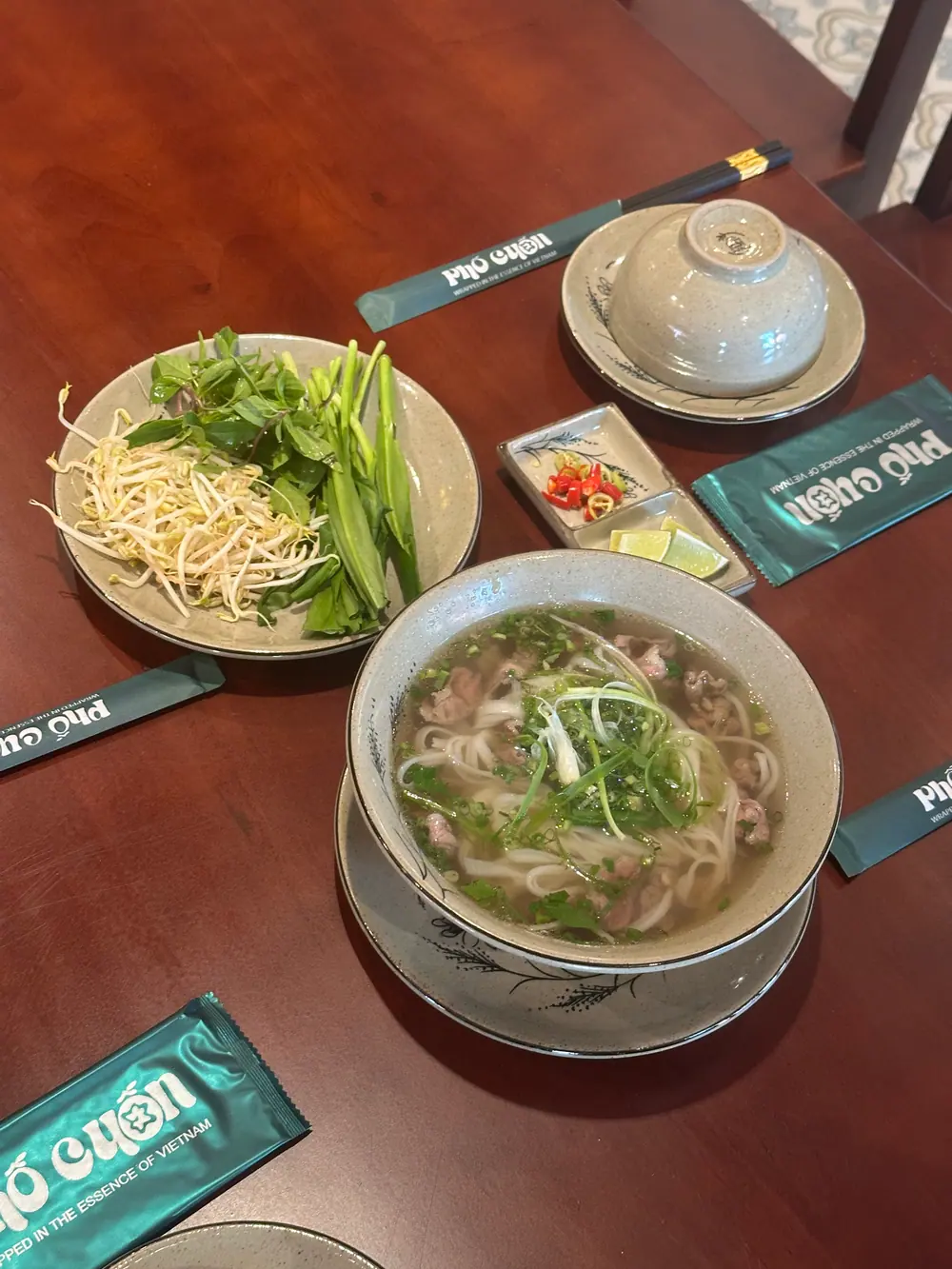
Why a Bowl Often Contains Both
Pairing flank (Nạm) with brisket point (Gầu) in the same bowl isn't just about having more meat. It's a way of orchestrating texture. A bowl of phở with only one type of meat can offer a repetitive sensation from start to finish; two textures side by side create an alternation — a fibrous bite, a melting bite, then another fibrous bite. The richness of the brisket point (Gầu) also enhances the delicate flavor of the broth in a way that flank (Nạm) alone cannot.
This also explains why brisket point (Gầu) is often placed on top, near the surface of the broth. That's the hottest and slowest-cooling part of the bowl, exactly where the fat layers need to be. If you receive a bowl with both, enjoying the brisket point (Gầu) in the first few minutes is the surest way to appreciate what it has to offer.
To learn what other cuts of meat bring to a bowl of phở, check out the articles on beef shank and its sinews and oxtail with its collagen content. And if you're holding a menu with only a minute to decide, the comparison chart of four beef cuts is written for just that situation. The current menu offerings can be found in the Phố Cuốn menu.
FAQ
Flank, Brisket Point, and Common Misconceptions
- Are 'Gầu Giòn' (Crispy Brisket Point) and 'Gầu Bùi' (Buttery Brisket Point) Two Different Things?
They are two different locations within the same brisket cut. The part closer to the sternum has more connective tissue, and when cooked, it becomes slightly chewy ('sần sật'), hence 'gầu giòn'. The inner part, with more marbling, is softer and richer, known as 'gầu bùi'. Since both are listed under the same name on the menu, if you have a clear preference, it's better to ask when ordering — each kitchen cuts and portions them in its own way.
- Is Beef Flank (Nạm Bò) the Same as Pork Belly (Ba Chỉ)?
No, although both are located in the belly region. Pork belly (ba chỉ) has evenly layered fat and lean meat from outside to inside; beef flank (nạm bò) is primarily lean meat with long fibers, only interspersed with thin sinewy membranes, not thick layers of fat. The beef cut that is structurally closer to pork belly in terms of layering is brisket point (gầu), not flank (nạm).
- Why does the brisket point (Gầu) in a 'Nạm Gầu' bowl sometimes taste greasy and waxy?
This usually happens because the brisket point (Gầu) hasn't been in the pot long enough for its fat layers to fully render into a translucent state, or because the bowl has cooled down before you get to it. The fat in the brisket area congeals very quickly as the temperature drops. If the bowl has just been served and the brisket point already feels waxy, it's highly likely that the issue lies with the cooking time rather than the bowl's temperature.