Phố Cuốn — Wrapped in the essence of Vietnam
A wall painted with a street of rolls is where the restaurant's name began. The brand story of the first floor sits inside that mural.

Sitting down at the table and looking up, the first thing that catches your eye, even before the menu, is the wall. On it, a street is painted at eye level: overlapping tiled roofs, narrow wooden window frames, old houses leaning into each other in the style of an ancient street. And running through the middle of that painting is an English phrase, written like a street name — STREET OF ROLLING ROLLS.
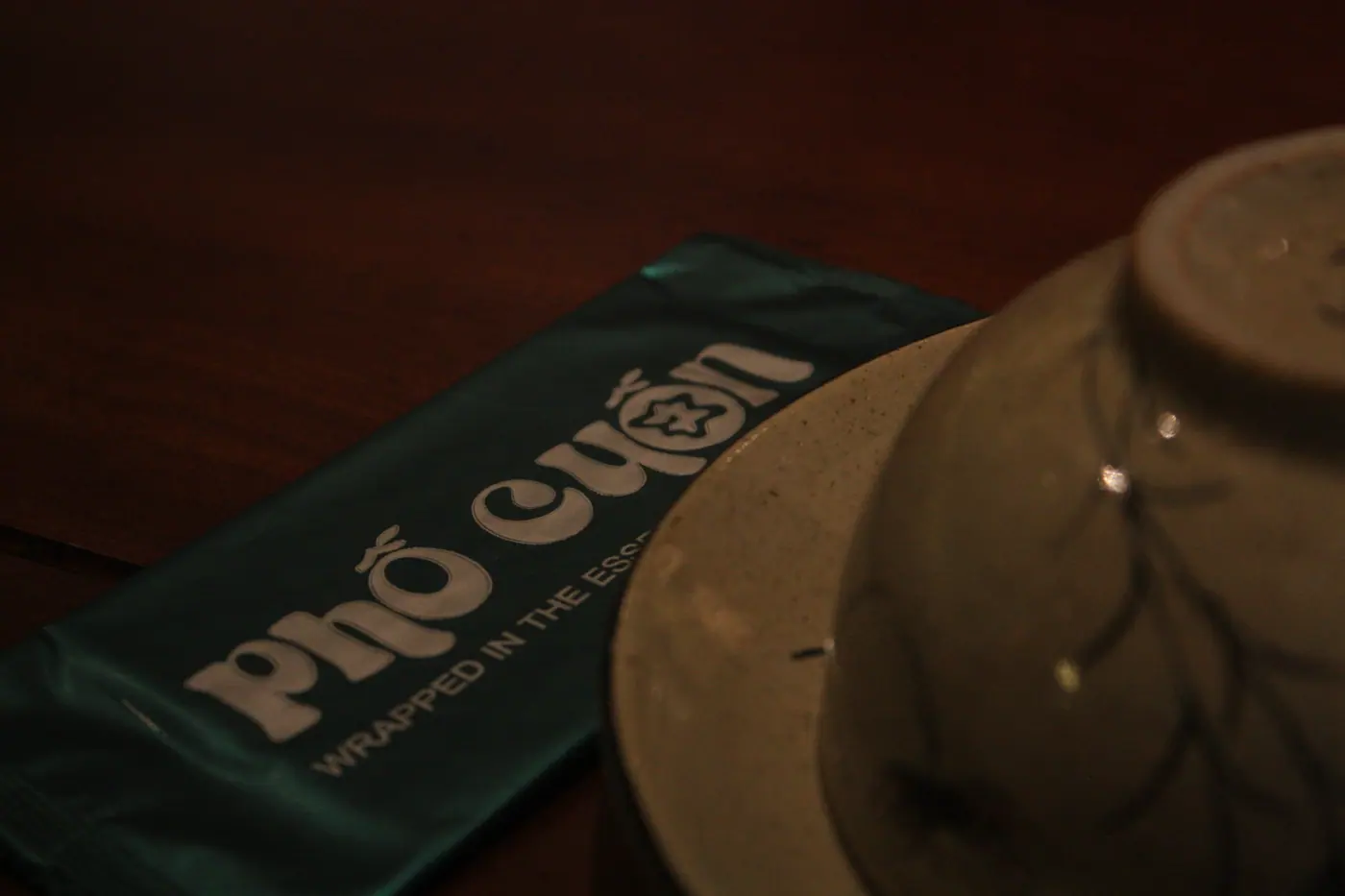
Quick Answer: The name Phố Cuốn is a double-layered wordplay. Phố means street, the place where this dish traditionally thrives. Cuốn is both the name for a family of dishes and the action of making them. The mural in the restaurant translates this name into an image — a street of rolls — while the phrase on the facade sign tells the rest: Wrapped in the essence of Vietnam.
The Two Words on the Sign, and the Play Between Them
The name consists of two words, and both have more than one meaning.
The word cuốn carries the wordplay. It's a noun when you order a dish: gỏi cuốn, nem cuốn, bê cuốn — a family of dishes sharing a common shape and way of eating. But it's also a verb, and that's the older meaning: cuốn is what you do with two hands, placing the filling, folding the two edges, then rolling it up. Few dish names in Vietnamese so clearly refer to both the object and the action. Placing that word on the sign means choosing both meanings simultaneously: this is a place for cuốn dishes, and also a place where the act of cuốn is performed right before your eyes.
The word phố places the dish in its rightful origin. Cuốn dishes are not born in a formal dining room; they are the food of street-side eateries, of vendors on plastic stools, of places people drop by between other activities. Keeping "phố" in the name is a way of saying that this origin is not hidden.
Combined, the two words create an image that doesn't exist in real life but everyone can immediately envision: a street where everything displayed along both sides are cuốn. The English version on the wall perfectly captures that wordplay — rolling rolls, where the object being rolled and the action of rolling are closely linked in two consecutive words. That translation preserves the most challenging part of a pun.
A Street of Rolls, Painted on the Wall
The name doesn't stop at the sign. It echoes throughout the dining room in subtle details, and that's what shows it was thoughtfully conceived, not just chosen for catchiness.
The mural is the clearest example: it doesn't depict the food itself but rather the context of the food — an old street scene, hung right above the heads of diners. This approach conveys something that a magnified photo of a dish cannot: what's memorable here isn't the roll on the plate, but the place to which that roll belongs.
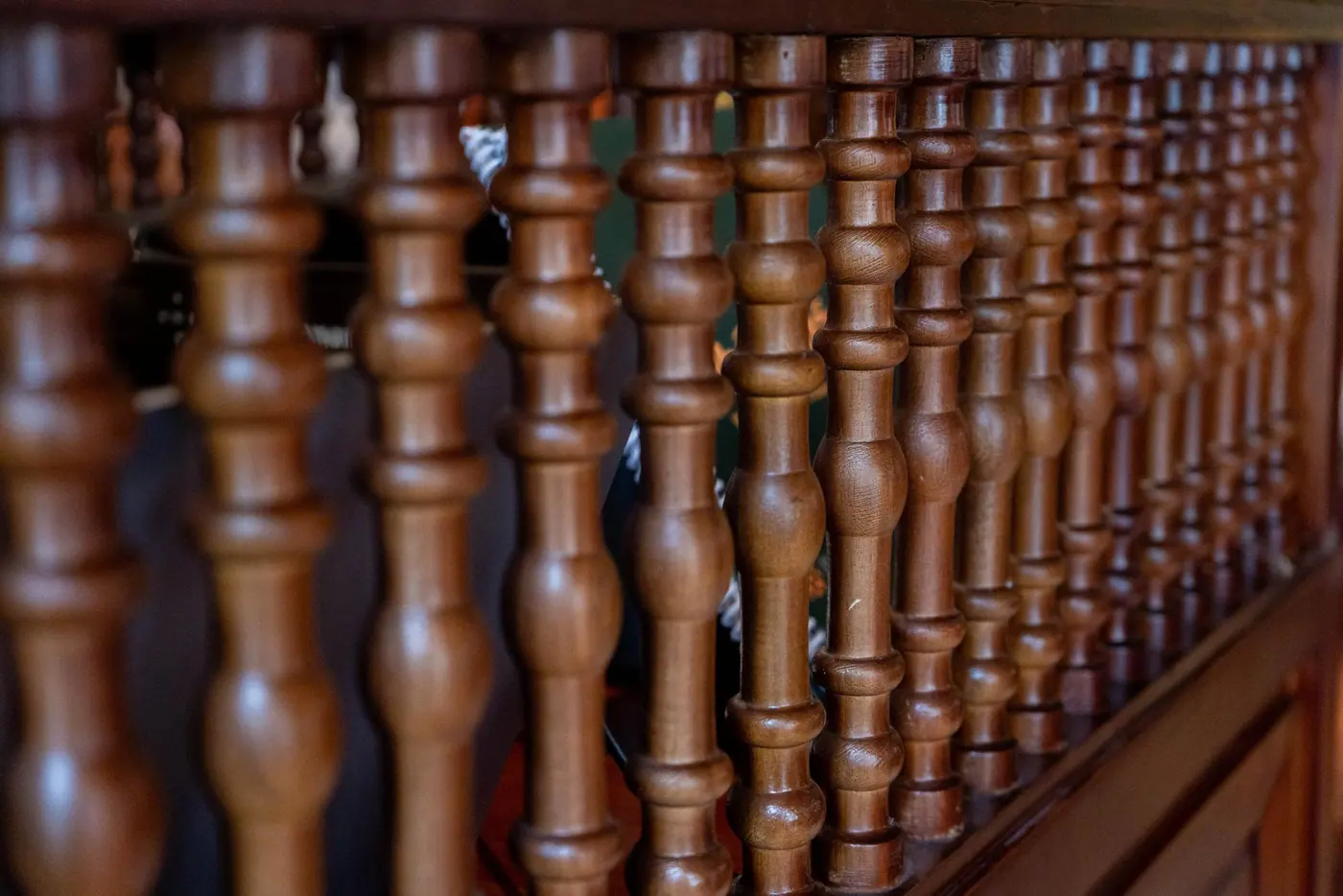
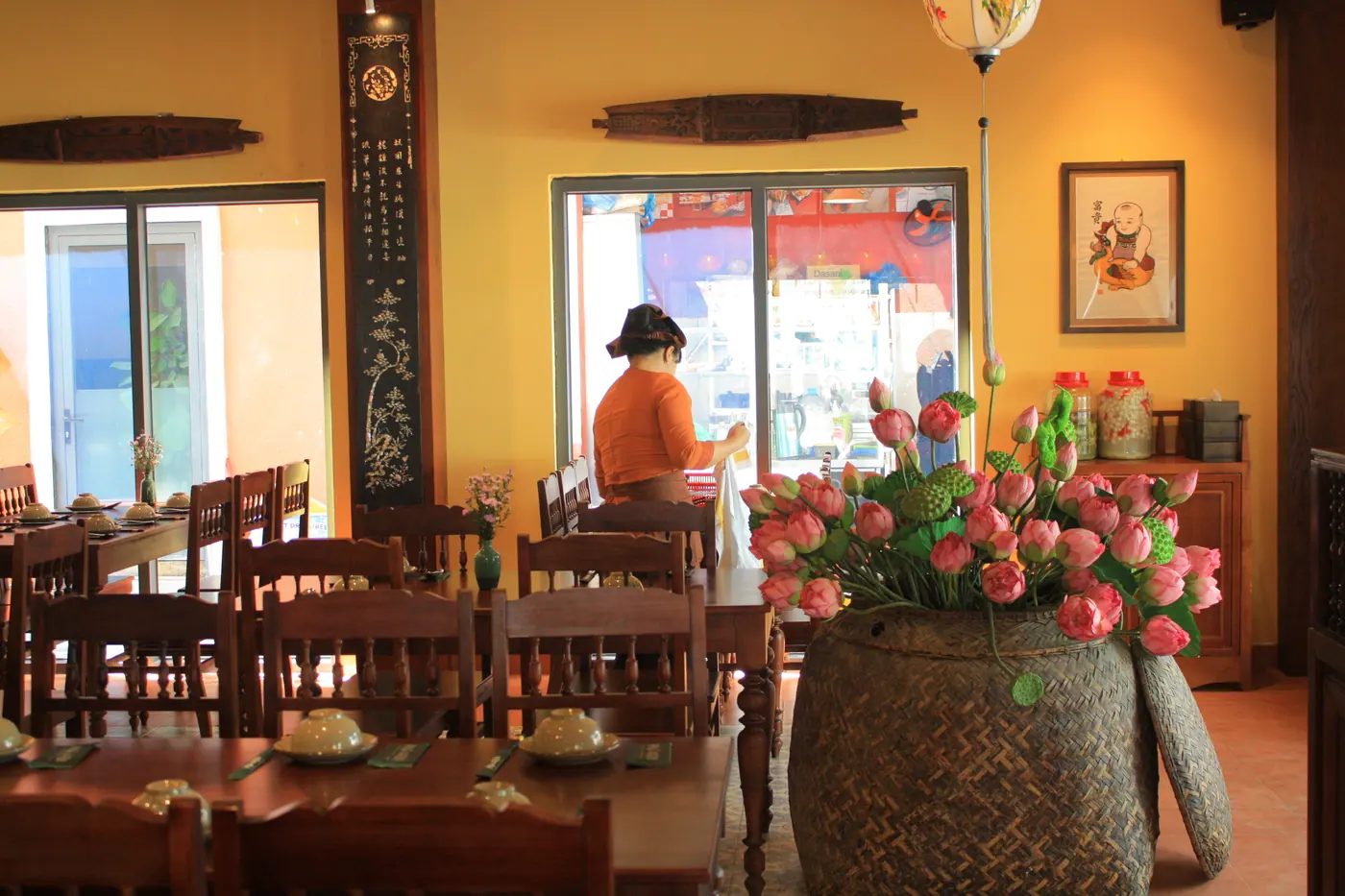
The rest of the dining room follows the same direction. The menu board hangs on the wall like an old general store, rather than being encased in glass; turned and carved wooden railings draw motifs from street houses; even the fabric napkins are embroidered with the logo. None of these items are ostentatious, and together they create a nostalgic street corner rather than a neutral dining space.
There's a phrase this brand uses to describe itself, so short it's easy to skim over: no need for elaborate delicacies. This is the most important statement in its entire identity, as it sets a boundary. A restaurant that chooses this phrase as its self-introduction is rejecting the easy path — the path of claiming its dishes are rare, its ingredients expensive. Instead, it embraces a more challenging task: taking dishes that everyone can find everywhere, and making them so thoughtfully that they are worth sitting down for.
The Subtle Promise a Name Like This Makes
Naming a restaurant after a street commits it to two things simultaneously, both of which can be verified very quickly.
First, the dishes must retain the true character of street food: simple, everyday fare, not requiring a special occasion to order. A menu that deviates from this would render the name on the sign merely decorative.
Second, and contrary to the first: when you bring street food into a room with wooden tables, embroidered napkins, and murals, people will scrutinize it more closely, not less. The same gỏi cuốn, eaten from a vendor's tray on the sidewalk, allows for many imperfections; eaten in a thoughtfully arranged room, every detail is observed. That is the price of creating such a setting, and also why this kind of promise is easily tested: with just one bite of a cuốn.
The story of how the layers inside a cuốn are arranged to be firm yet not crushed is told from the beginning in the article about shrimp spring rolls, and the 1st floor menu is where you can see how that name unfolds into so many dishes. And if you're wondering why you see more than one sign upon arrival, four flavors at one address explains. The official introduction page for the 1st floor is at Phố Cuốn.
FAQ
Questions Around the Name Phố Cuốn
- Does the word "cuốn" in the restaurant's name refer to the dish or the action?
Both, and that's intentional, not a coincidence. In Vietnamese, "cuốn" is a verb meaning to roll something up, and from that, it became the name for dishes made in that way. A name that retains both meanings tells you what's sold here and also that the dishes are handmade. The English phrase on the wall deliberately preserves that dual meaning.
- What does the English phrase on the sign mean?
Wrapped in the essence of Vietnam literally translates to "wrapped in the core of Vietnam," and it continues the wordplay of the name: the word wrapped is both the action of wrapping a cuốn and a metaphorical way of speaking about wrapping something more abstract. Placed alongside the phrase on the mural, the two sentences complement each other — one describes the place, the other describes what is wrapped within it.
- Why does a Vietnamese restaurant have an English phrase on its wall?
Because the wordplay in the Vietnamese name isn't apparent to those unfamiliar with the language. For Vietnamese-speaking guests, "Phố Cuốn" explains itself in half a second; for non-Vietnamese speakers, it's just two syllables. An English phrase that preserves that dual meaning is a way for the name to communicate with both audiences, and in an area with many foreign visitors like An Thượng, it's a practical choice, not a pretentious one.