Tái lăn: The sizzling sound of a hot pan, just before the sauce is poured.
Before it reaches the bowl, the meat rolls quickly through a hot pan with onion and garlic. A step of seconds that changes its smell and sweetness.

The cast iron pan is heated over high flame until a drop of water instantly evaporates upon contact, leaving no trace. A pinch of minced garlic goes in first, fragrant in two seconds; immediately followed by a handful of dried beef, spread out into a thin layer. A sizzling sound erupts and then almost simultaneously fades. In less than half a minute, that meat is already nestled on the pho noodles.
Quick Answer: Tái lăn is beef quickly stir-fried in a very hot pan, usually with garlic or onions, then arranged in a bowl and topped with broth. Compared to Tái chần — thinly sliced raw beef cooked by hot broth directly in the bowl — Tái lăn gains an extra layer of aroma from the browning reaction on the pan. However, it's more challenging: if the pan cools down even slightly, the dish transforms from stir-fried to boiled.
What Happens on the Pan in Twenty Seconds
What makes Tái lăn special is the browning reaction between sugars and amino acids on the meat's surface, which creates hundreds of aromatic compounds that can never be achieved by boiling in water. But this reaction only occurs when the surface is dry and the temperature significantly exceeds water's boiling point. As long as the exterior remains moist, all the pan's energy is used to evaporate water, the surface temperature is locked around one hundred degrees Celsius, and the meat is merely being boiled in a pan.
Three key actions stem from this principle. First, pat the meat dry with paper towels before placing it in the pan. Second, the pan must be truly scorching hot — so hot that the meat sizzles immediately upon contact, with no silent pause. Third, stir-fry in small batches: adding too much meat at once causes the pan's temperature to drop, the meat releases water, and the entire batch ends up swimming in its own juices.
Time is very short, and this is where many go wrong. The meat is thinly sliced against the grain, so it cooks almost instantly; exceeding thirty to forty seconds causes muscle fibers to contract and the meat to become tough. The goal isn't to fully cook the meat in the pan — the hot broth will complete that — but to create that aromatic crust on the exterior and then stop.
Salt and fish sauce should be added very sparingly or at the very end. The broth already contains salt, and more importantly: sprinkling salt too early draws moisture from within the meat to the surface, precisely what we just worked to dry. Garlic, on the other hand, burns faster than the meat cooks, so either sauté it until fragrant and remove it, or add it in the very last second.
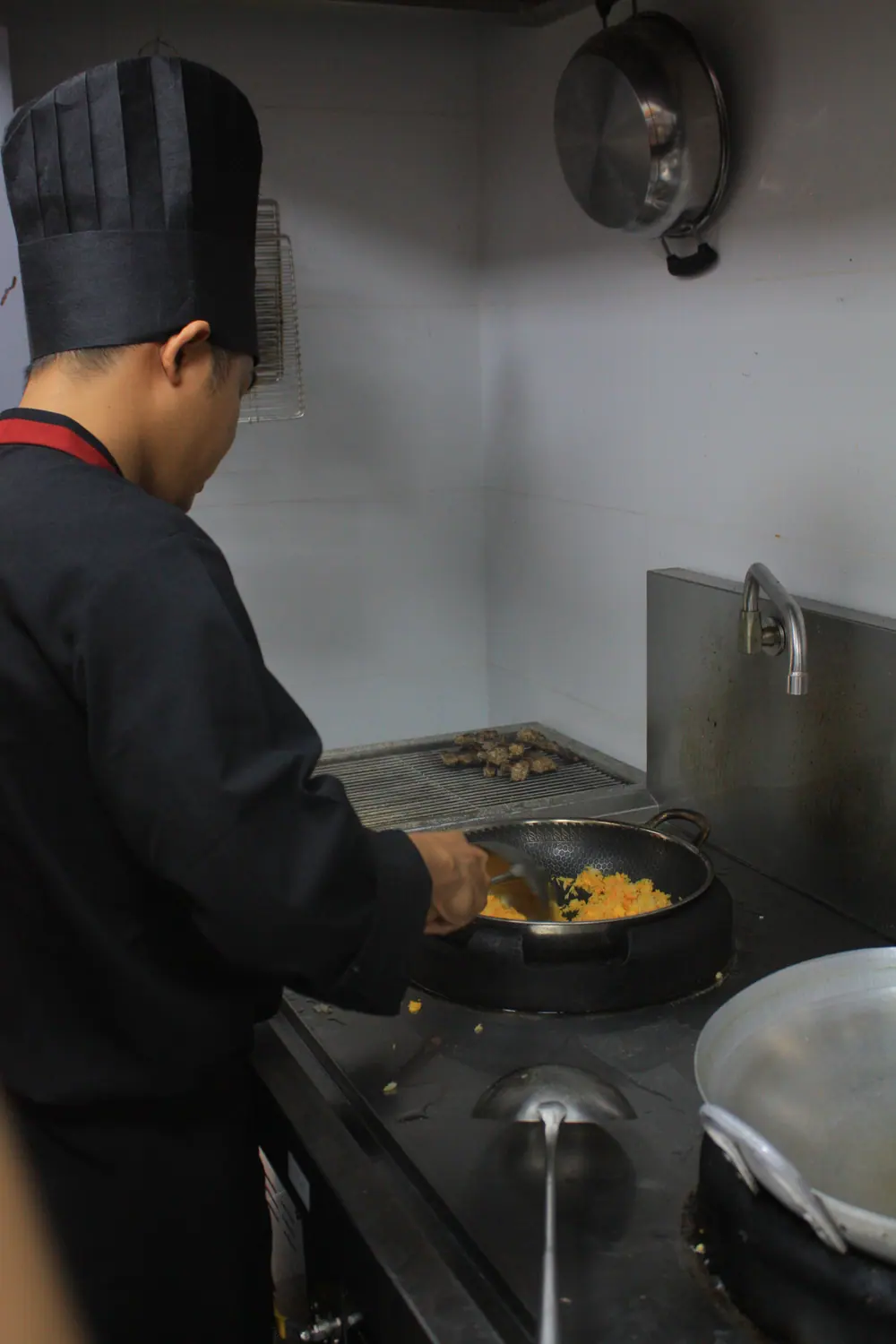
Try Stir-Frying a Batch of Beef in Your Own Pan
The method below is written for a home pan and a regular gas stove. Restaurant stoves operate at a completely different power level, so please don't read this as Phố Cuốn's exact recipe.
Ingredients for four bowls:
- 400 g tender beef, thinly sliced against the grain
- 2 cloves minced garlic, 1 tablespoon high-heat cooking oil
- A pinch of ground pepper and a few drops of fish sauce
- 2 liters of piping hot pho broth
- Blanched pho noodles, green onions, and fresh herbs
Steps:
- Spread the meat on a plate, pat both sides dry with paper towels, and let it sit out for ten minutes to reduce its chill.
- Heat the pan until it just begins to smoke, add oil, swirl to coat, then quickly sauté the garlic.
- Add about a quarter of the meat, spread it into a single layer, let it sit for five seconds before stirring.
- Stir-fry for another ten to fifteen seconds, then immediately transfer it out; continue with the next batch, do not combine batches.
- Arrange the meat on the pho noodles, ladle in piping hot broth, and serve immediately.
If your pan is thin and retains heat poorly, reduce the amount of meat per batch by half instead of increasing the flame. A thin pan over too high a flame will burn the direct contact points while still not providing enough heat for the rest.
A Bowl of Pho Carrying the Aroma of a Pan
A bowl of Tái lăn holds two very different timelines. The broth pot has been simmering for hours; the meat on top was just finished less than a minute ago. When the bowl is placed down, what you smell first is the aroma of the pan — sautéed garlic and the freshly browned meat surface — rather than star anise and cinnamon. That aroma dissipates quickly, so if there's one reason to eat the meat first, this is it.
Another thing happens right in the bowl: the freshly browned exterior will gradually soften as it soaks in the broth. After a few minutes, the Tái lăn piece won't differ much in texture from regular cooked meat, though the aroma will linger. This dish offers its rewards concentrated in the initial minutes.
The ability to customize — such as requesting no garlic, or a different doneness level — depends on each kitchen's process, so that's a question for the staff when ordering, not something an article can answer for you. If you'd like to read more about other cuts of meat, we have articles on beef shank and its tendons and the brisket-flank duo; and the comparison chart of four beef cuts is written for when you're holding the menu. See what's currently served on the 1st floor at Phố Cuốn's menu.
FAQ
Tái lăn: Common Misconceptions
- How is Tái lăn different from Tái chần and Tái nạm?
Tái chần is thinly sliced raw meat placed directly in the bowl, allowing the piping hot broth to cook it on the spot — there's no pan contact, so no browning aroma. Tái lăn adds precisely that step: the meat is quickly stir-fried in a hot pan before going into the bowl. Tái nạm, on the other hand, is simply the name for a bowl containing both rare (tái) and cooked flank (nạm), referring to the ingredients rather than a specific technique.
- Why does Tái lăn meat release a lot of liquid in the bowl?
This is usually due to the pan not being hot enough or adding too much meat at once. Both lead to the same consequence: the surface temperature doesn't exceed the evaporation point, the meat releases water, and that water doesn't have time to evaporate. The meat then never browns, only cooks in its own juices, resulting in a bland flavor and a tendency to be tough.
- Is Tái lăn meat still raw?
Not necessarily. The meat has been in a hot pan, and its doneness depends on the stir-frying time and slice thickness; additionally, the hot broth continues to cook it in the bowl. If you need to be certain about the doneness — for instance, when dining with children or those who need to avoid rare meat — please inform the staff clearly when ordering.