Vietnamese Breakfast for International Guests: Let's Start with Pho
A Vietnamese breakfast is hot, has broth and is eaten at the table — unlike the habit of cold bread. So where is the easiest place to start?

At seven in the morning, a guest settles into a chair, opening the menu to the first page. A steaming bowl on the next table catches his eye, a hint of surprise on his face. Back home, his mornings are a quick affair: cold bread and coffee, eaten standing in the kitchen, all done in four minutes. That bowl, however, clearly invites a more leisurely experience.
Quick Answer: A Vietnamese breakfast is typically a hot, soupy dish, eaten seated at a table and finished on the spot, not a cold, grab-and-go meal. If this is your first time, phở is the easiest place to start: its fundamental flavor comes from the broth, not from any single strong spice; it's usually not pre-spiced with chili, and all additional condiments are served separately for you to customize.
Why Breakfast Here is a Hot Bowl
What surprises foreign guests the most isn't the dish itself, but its temperature and setting. In many places, breakfast is a cold meal, eaten at home or on the go. In Vietnam, breakfast is largely enjoyed at restaurants, served hot, and eaten on-site — people sit down, finish their meal, and then head to work. It's a proper meal, not just a buffer before lunch.
The second surprise is that breakfast often includes a broth. A bowl of phở consists of rice noodles, hot broth, thinly sliced meat, and green onions; fresh herbs, lime, and chili are served separately on a plate. This structure is repeated in many other Vietnamese breakfast dishes, so if you get accustomed to it, you'll unlock a whole category of meals, not just one bowl.
One thing to clarify: not all Vietnamese people eat phở every morning. Bún, mì, xôi, cháo, and bánh mì are all popular breakfast options, and many simply drink coffee before heading to work. Phở is a familiar choice, not a national ritual.
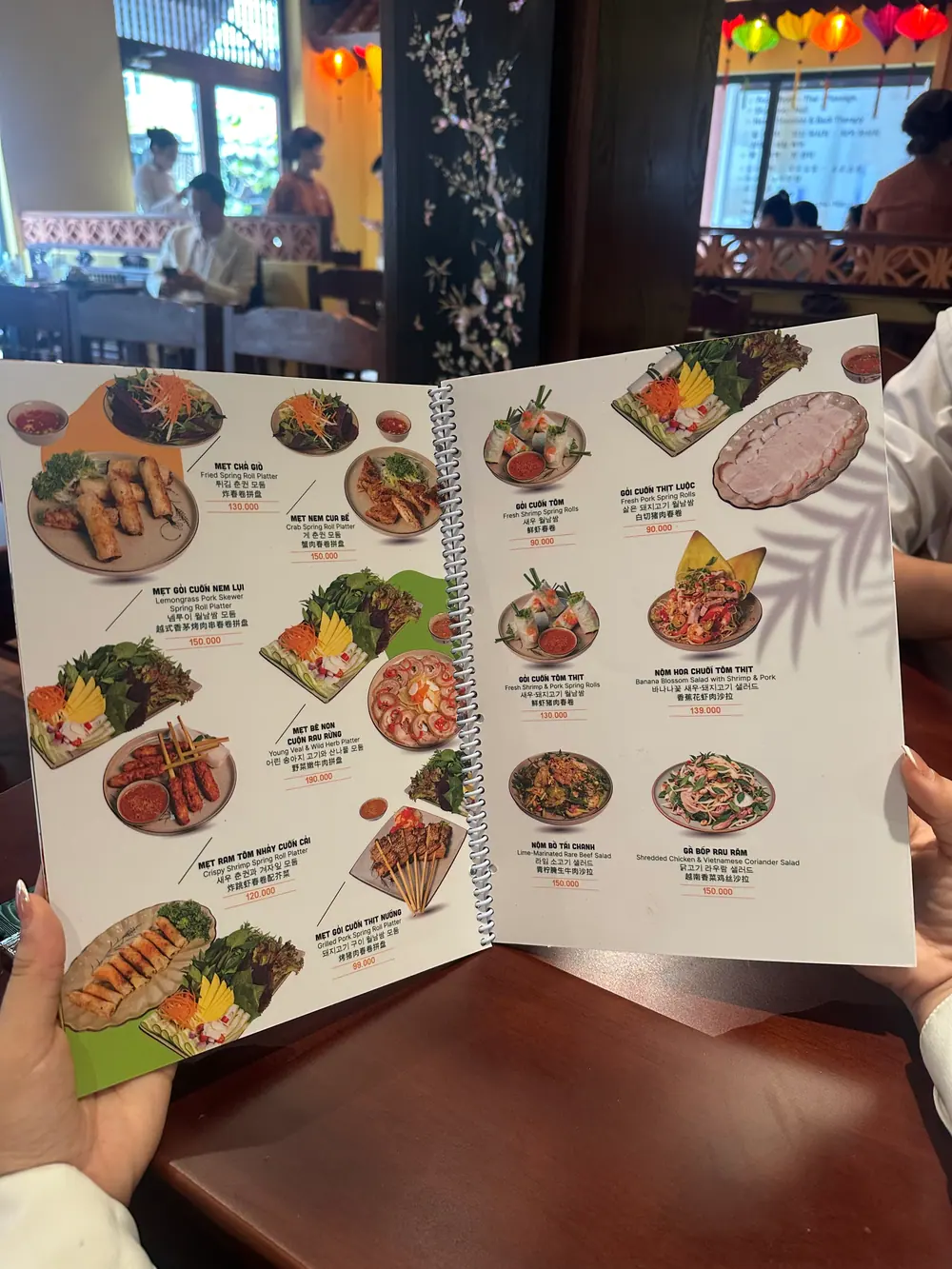
Three Names to Get You Started
You don't need to read the entire menu. The three names below cover almost all scenarios for a first-time breakfast.
- Phở bò — phở with beef, featuring a richer and deeper broth. The Phở Bò Bắp Hoa (Beef Shank Phở) at 80,000đ is the most approachable bowl in the beef category: thinly sliced meat, no bones, nothing to handle with your hands.
- Phở gà — phở with chicken, offering a lighter broth and a shorter finish. The Phở Gà (Chicken Phở) at 80,000đ is suitable for those not yet accustomed to soupy dishes in the morning, or who don't eat beef.
- Gỏi cuốn tôm — not a soupy dish. These are cold rolls wrapped in rice paper, eaten by hand, dipped in a separate sauce. The Gỏi Cuốn Tôm (Shrimp Fresh Rolls) at 90,000đ is an entry point for those who find a hot bowl too much at seven in the morning.
Beyond dish names, there are a few words that might come up in a server's questions and are worth knowing beforehand. Chín kỹ means thoroughly cooked, used when you don't want your meat to be pink. Không hành (no onion) and không rau thơm (no herbs) are two of the most common requests, and both are better communicated upfront rather than after the dish arrives. For allergies, there's a specific trap for foreign guests: the English translation of a dish name still won't list all ingredients for you. Be direct about what you need to avoid and double-check with the restaurant — this article for first-timers explains this in detail.
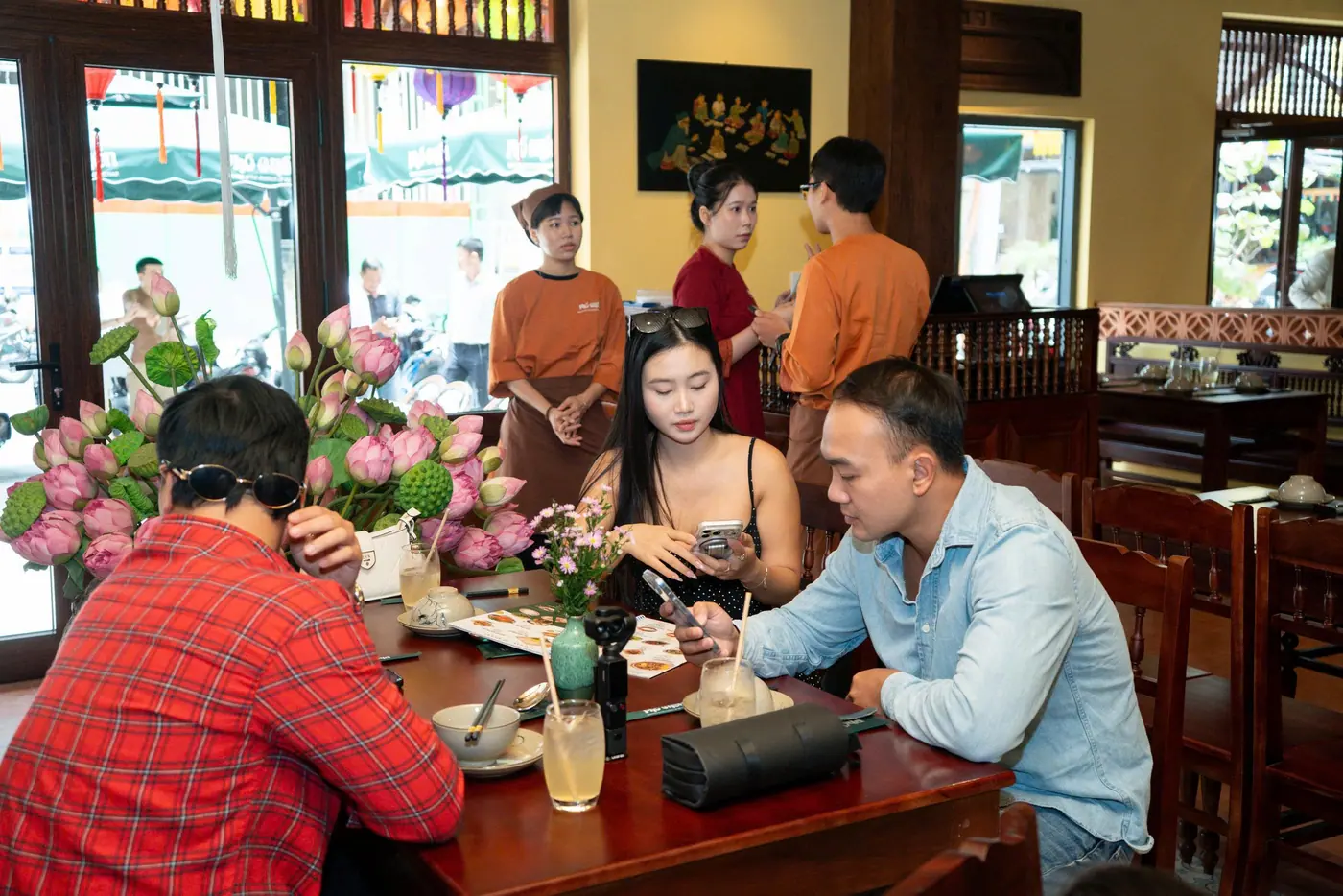
Sit Down Without Needing to Know Anything
The most pleasant aspect of a Vietnamese breakfast is that it requires no prior knowledge. The website menu features photos for almost every dish, so you can browse at home and then simply say the correct name when you arrive. Herbs and condiments are served separately, so your bowl starts in a neutral state, and you can add or remove ingredients to your liking. There's no mandatory order of dishes, no rituals to observe, and no one will pay attention to how you hold your chopsticks.
Two things to keep in mind to avoid missing out: soupy dishes are eaten hot, so don't wait for anyone — start eating as soon as your bowl is placed down, even if your dining companions haven't been served yet. And a bowl of phở is truly hot, hotter than most breakfast dishes elsewhere, so your first spoonful should be small.
For the order of ordering and how to customize your dish, this article for first-timers provides step-by-step instructions, including when to squeeze your lime. And if your morning starts with a swim, this article on early morning routines places your meal perfectly within your schedule. If you want to see all dish categories, not just phở, the 1st floor menu lists everything.
FAQ
Questions from a First-Time Guest's Table
- Do Vietnamese People Eat Phở Every Morning?
No. Phở is one of many breakfast options, and in many places, it's not even the most popular choice — bún, Mì Quảng, xôi, cháo, and bánh mì are all common breakfasts depending on the region and individual preference. The statement "Vietnamese people eat phở every morning" is a nice-sounding generalization but isn't accurate, and if you travel widely within the country, you'll quickly see that for yourself.
- Should I Learn a Few Vietnamese Words or Just Point to the Menu?
Pointing to the menu is the quickest and most foolproof method, especially if you've already seen photos of the dishes. However, there are three phrases worth learning because they convey what a finger cannot: the name of the dish you want, the word for your preferred doneness, and a phrase for what you cannot eat. These three phrases will cover most situations, and for anything else, the staff will clarify with you.
- Can I Order a Roll Dish Instead of a Soupy Dish for Breakfast?
Yes, and it's a perfectly reasonable choice for those who find a hot bowl too much early in the morning. Roll dishes are cold, light, eaten by hand, and you control the amount of dipping sauce, so the flavor isn't overwhelming. There's just one practical note: they don't provide the warm liquid your body often craves after a night's sleep, so many people order something hot to drink alongside them.