Phở's Journey from Hanoi to a Morning in An Thượng
From northern street carts to a breakfast bowl in An Thượng is a long road. Here is where the records are firm, and where they are still open.

Just before seven, An Thượng is shifting gears. Motorbikes carrying surfboards pass trash collection trucks in the opposite direction, and the dry rattle of rolling shutters being pulled up fills the air. At a pho stall at the end of an alley, a customer, just pulling up a chair, smells the aroma of grilled onions before even glancing at the menu. This scene repeats every morning in countless places across the country, and it's the final leg of a journey far longer than it appears.
Quick Answer: Most historical accounts suggest pho took shape in the Northern Delta region around the late 19th to early 20th century, with Nam Định often cited as its geographical cradle and Hanoi as where the dish truly solidified its form. Pho then traveled south with waves of migration and eventually spread worldwide, each leg of its journey leaving behind a unique variation. A morning bowl of pho in Da Nang is a later link in that journey — neither the starting point nor a mere copy.
What Historical Records Tell Us, and Where They Fall Short
The most certain thing about pho's origins is rather humble: the dish was popular before anyone bothered to write it down. The earliest records mention pho as a dish already available on the streets, meaning it had a real-life existence for some time before making it onto paper. For a street food dish, this is normal — and it also means that any specific year mentioned should be read with a question mark.
There are three commonly cited theories about the word "phở," and all three still have proponents today. First: pho is a descendant of ngưu nhục phấn, a Chinese beef noodle dish, with the word "phấn" mispronounced as "phở." Second: pho comes from pot-au-feu, a French beef stew, with vendors calling out "feu" which then became the name. Third: pho developed locally from xáo trâu, a buffalo soup sold by northern riversides, with buffalo meat being swapped for beef when beef became more accessible. No single theory has definitive textual evidence to close the debate. The National Tourism Portal also presents the story with multiple theories.
What can be said with more certainty lies in the dish's nature, not its birth date. Pho is an urban dish, a morning dish, and originally a mobile dish — with the broth pot carried on a shoulder pole, bowls washed in a bucket, and customers eating standing up. When pho settled into a shop with tables and chairs, it gave birth to the ordering language we still use today: tái (rare beef), chín (well-done beef), nạm (flank), gầu (brisket), gân (tendon), sách (tripe). To order by specific cuts of meat, there must be enough meat to portion out, and to have enough meat, one must stay in one place.
How Pho Transformed on its Journey South
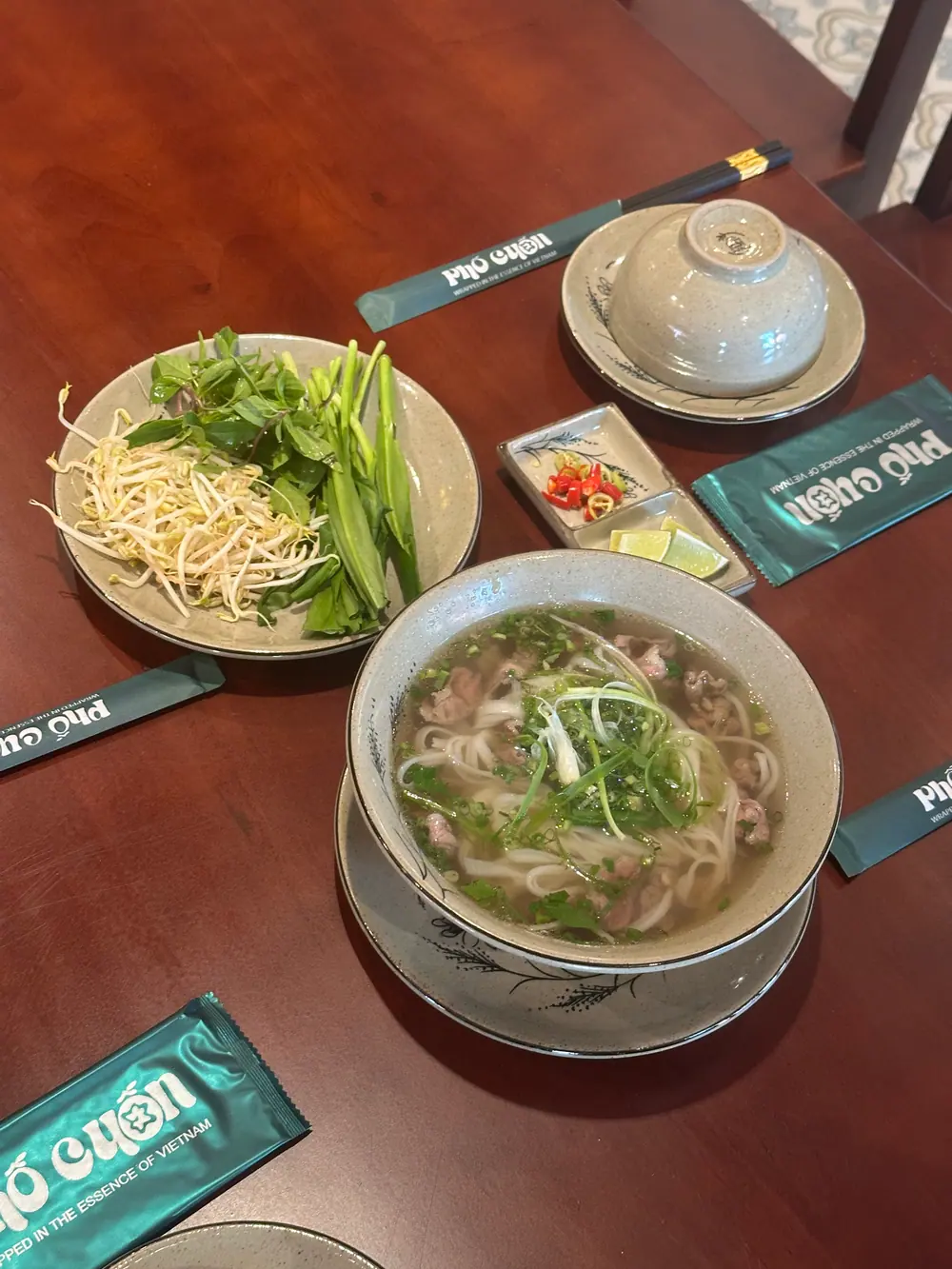
The population migration of 1954 marked the most significant transformation for pho. Upon reaching the South, the bowl of pho gained something almost absent in the North: a side plate. This plate of accompanying herbs and vegetables, including bean sprouts, basil, saw-leaf herb, a few chili slices, and a lime wedge, is served separately for diners to add as they please. At the same time, two types of sauces — hoisin sauce and chili sauce — went from being non-existent to taking a prominent place right beside the bowl.
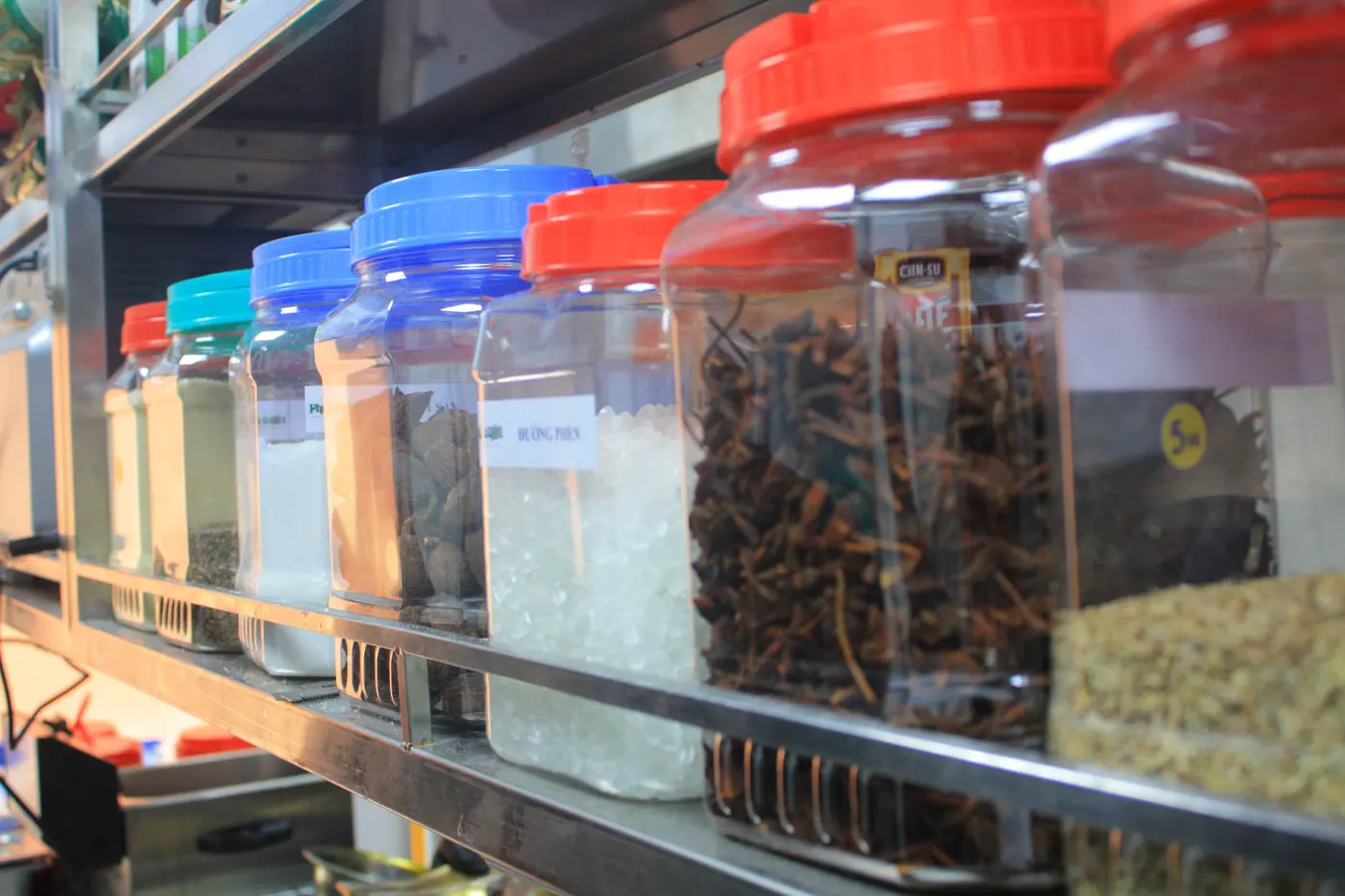
The broth's flavor also shifted. Southern kitchens tend to make their broth sweeter, partly due to using more onions and rock sugar; the bowl size also gradually increased. Northern pho bowls maintain a narrower list of condiments: green onions, a touch of garlic vinegar, fresh chilies, and diners are expected to add almost nothing else. This isn't a matter of right or wrong. It's two different answers to the same question — how much seasoning the cook pre-adds, and how much decision-making is left to the diner.
Da Nang sits right at the crossroads connecting these two styles. Kitchens in this city draw influences from both directions, so within a few blocks, you might be served two bowls of pho that disagree on what should be on the table. The specific components of the accompanying herb plate are up to each kitchen and change seasonally, so if you need to know exactly which herbs are available that day — for instance, if you're avoiding a particular type — please ask the restaurant when ordering instead of guessing from an article.
Why Pho Remains a Morning Staple in a Beach City
Early morning beachgoers at Mỹ Khê often return to An Thượng around seven, skin still salty, and the hunger at that moment takes a very specific form: hot, savory, and not greasy. A bowl of pho replenishes water and salt for the body, can be finished in fifteen minutes, and leaves no heavy feeling before a long day ahead. That's the very practical reason why a dish born in the Northern Delta thrives so well in a Central Vietnamese beach city.
Pho's journey continues beyond this article. If you want to know why the first spoonful of broth can be both clear and rich, the article on broth delves into the technical aspects. If you prefer to read about pho as a literary piece rather than a process, Vũ Bằng's chapter dedicated to pho is a must-visit. And if all you need is a place to sit before heading to the beach, the guide to breakfast in the An Thượng area covers just that.
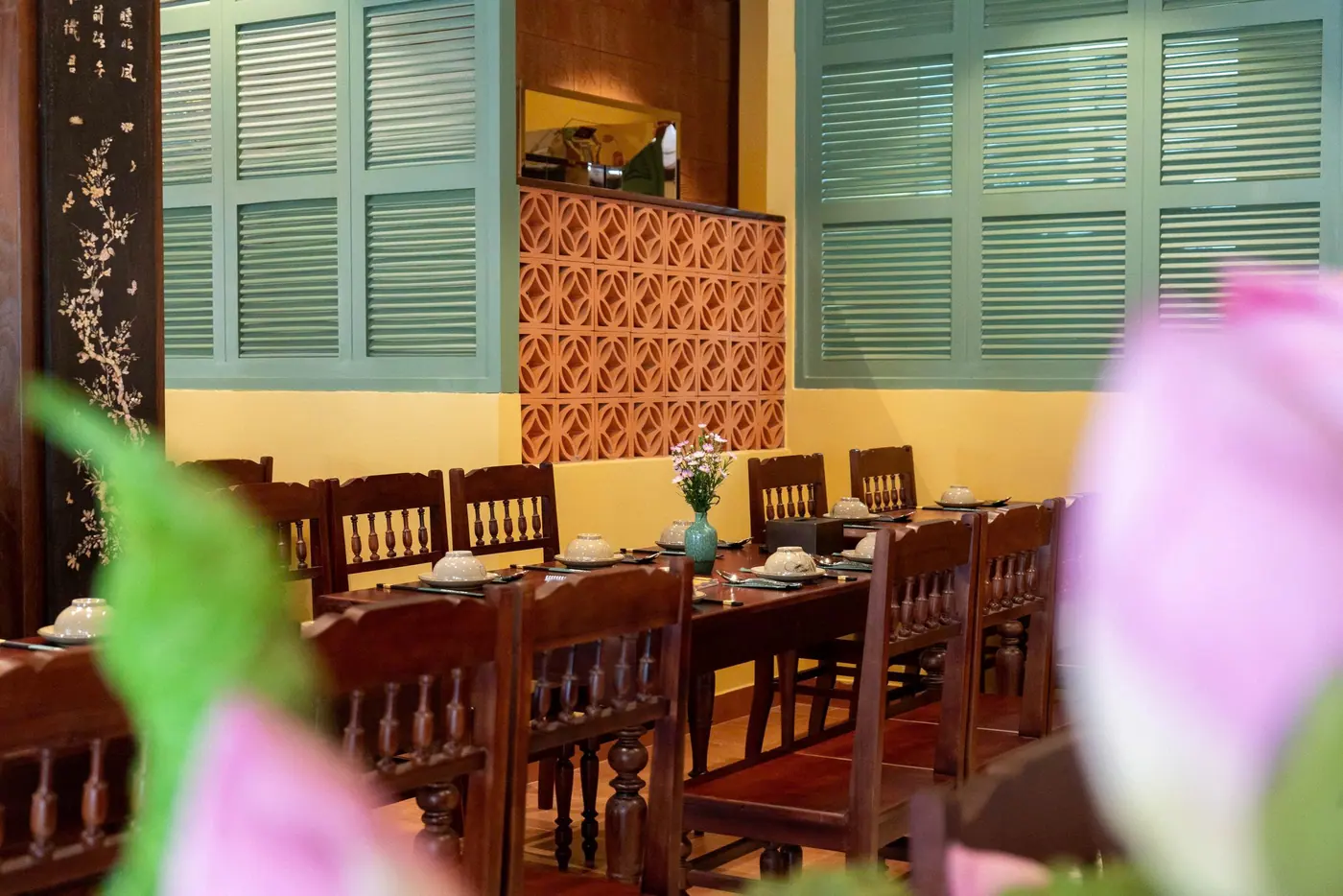
At Furama Dining House on the first floor, that long story is distilled into a single bowl placed before you. The Phố Cuốn restaurant page features the current menu, if you'd like to see which pho bowls are continuing this journey.
FAQ
Three Frequently Asked Questions About Pho's Origins
- Is Pho Definitely From Nam Định?
Nam Định is often mentioned as its geographical cradle and Hanoi as where pho most clearly took shape, but this is a popular narrative rather than a definitively documented conclusion. Debates continue regarding both the word "phở" and the dish's evolutionary origins. The healthiest approach is to view pho as a product of cultural fusion, perfected by Vietnamese people over many generations.
- Why Do Southern Pho Bowls Come with a Large Herb Plate While Northern Ones Don't?
The accompanying plate of fresh herbs is something pho acquired after moving South, where aromatic herbs are abundant year-round and dining customs allow diners more decision-making power. Northern pho bowls maintain a narrow list of condiments because the cook is expected to have completed their seasoning work. These two styles coexist in parallel; neither is a correction of the other.
- Where Does the Vietnamese Word "Phở" Come From?
There is no definitive answer yet. Three commonly cited theories are the word "phấn" from ngưu nhục phấn, the word "feu" from pot-au-feu, and a local evolution from the dish xáo trâu. Each theory has its own arguments but lacks decisive evidence, so any article that definitively asserts one of the three is overstating what is known.