Why Is Phở Broth Clear Yet Still Deep in Flavor?
Clear broth comes from cleaning the bones, skimming the foam and holding a bare simmer. The depth comes from time, not from the seasoning hand.

Before dawn, the kitchen clock has less work than the skimmer. The cook leans over the pot: a patch of grey-brown foam has just risen to the edge, the skimmer makes a pass, and the foam is gone. The heat is turned down until the surface of the water barely trembles, not a single bubble rising. For the next hour, the kitchen's work is almost exclusively this.
Quick Answer: Clear pho broth is the result of three mechanical tasks — blanching and thoroughly rinsing bones before simmering, skimming foam as it rises, and maintaining a gentle simmer rather than a rolling boil. Richness, however, comes from time: gelatin, amino acids, and aromatics need hours to release from the bones into the water. These two aspects are not interchangeable, and heavy seasoning cannot compensate for a rushed simmer.
Three Steps for a Perfectly Clear Broth
The first step is pre-cleaning before simmering. Newly purchased beef bones carry clotted blood in the marrow, tiny bone fragments, and a layer of surface proteins — all of which will coagulate into cloudy residue as soon as they meet heat. Blanch the bones in a separate pot of water, discard all the initial water, then rinse each piece under the tap until no brown residue clings to the joints. This is the only step in the entire process where a careless mistake cannot be corrected later.
The second step is timely skimming. For the first fifteen to twenty minutes, foam rises, grey-brown in color and forming clumps — these are soluble proteins coagulated by heat. Skimming all of this away during this initial phase ensures a perfectly clear surface later on. Foam that rises in subsequent hours is usually whiter and thinner, mostly fat, and that's a different matter: whether to skim it or leave it depends on your preference for richness, as it won't make the broth cloudy.
The third step is temperature, and this is where many broths go wrong. Every bubble that breaks on the surface of the water is a stir: it agitates tiny solid particles and keeps them suspended instead of allowing them to settle to the bottom. A vigorous rolling boil does even worse — it emulsifies fat into the water, and a broth made cloudy in this way cannot be saved even by straining. The ideal level to maintain is for the water's surface to just tremble, with only an occasional single bubble rising. Do not stir, and if the water level drops, add boiling water, not cold water.
So, where does the richness come from? From three combined sources: gelatin released from marrow and joint bones after many hours, meaty flavor from a piece of flank or shank simmered along and removed when just tender, and the smoky sweetness of charred onion and ginger. Fish sauce is added last, as its aroma dissipates if subjected to heat for too long.
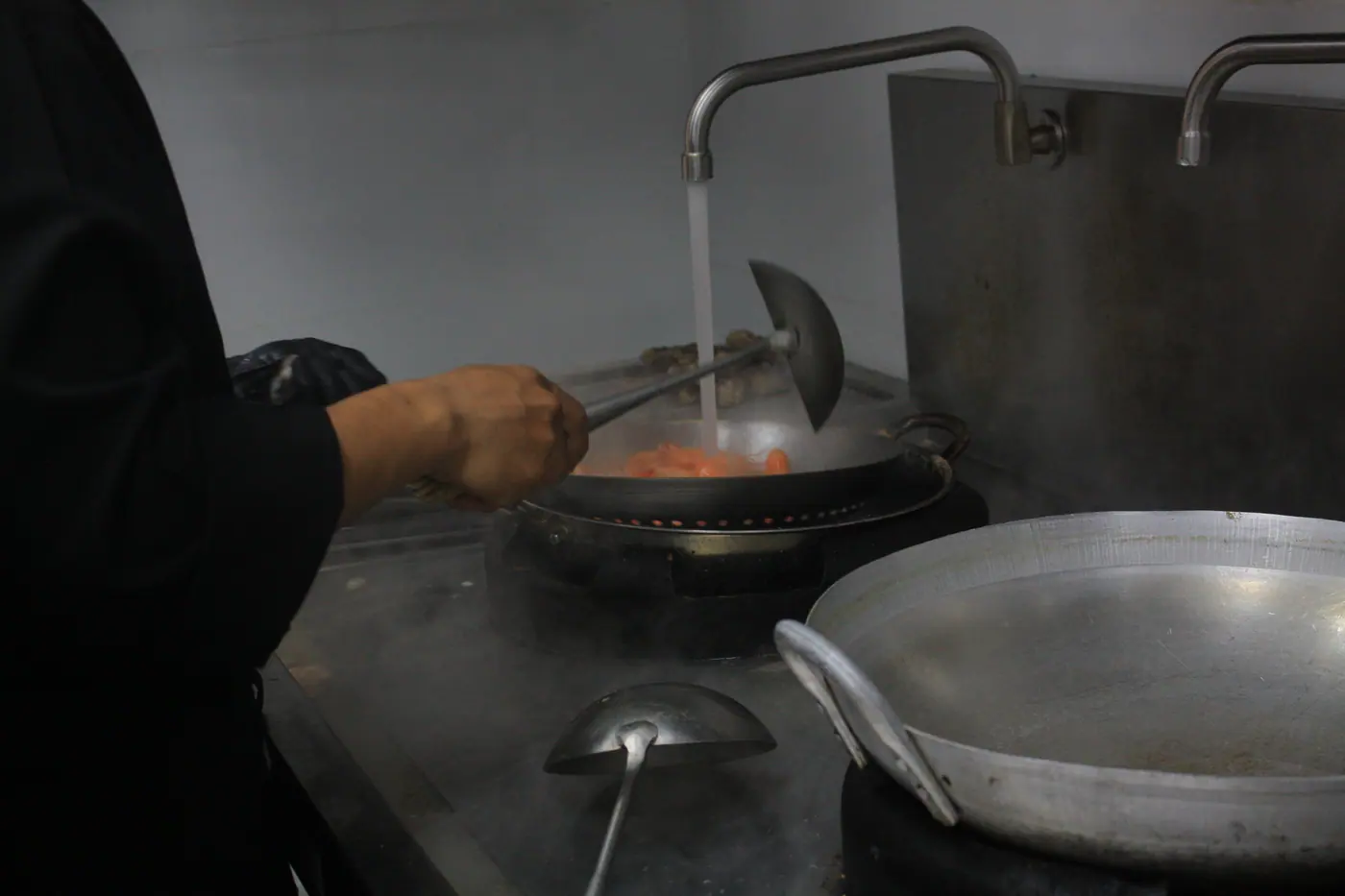
Try Making Broth in Your Home Kitchen
The following section is written based on general culinary principles, intended for a home kitchen with one pot and a free morning; it does not describe how the Phố Cuốn kitchen operates and should not be read as such.
Ingredients for approximately four bowls:
- 1.5 to 2 kg beef marrow and joint bones
- 300 to 400 g beef flank or shank for meaty flavor
- 4 liters cold water
- 1 large onion and 1 ginger knob, charred until the skin is blackened
- Salt, fish sauce, a small rock sugar cube
Steps:
- Blanch bones in a separate pot of boiling water for about five minutes, discard all water, and rinse each piece under the tap.
- Place bones, meat, and 4 liters of cold water into a clean pot, bring to a gentle simmer, then immediately reduce heat.
- Skim foam continuously for the first twenty minutes, then check every half hour.
- Remove the meat when a skewer passes through with slight resistance, immerse in cold water, then set aside; continue simmering the bones.
- Add the charred onion and ginger in the final hour, season at the very end, then strain through a fine-mesh sieve.
A small, memorable tip: when straining, do not press or push the residue in the sieve. Naturally flowing liquid is clear; forced liquid carries exactly what you spent hours separating.
The Broth from the Diner's Perspective
The diner doesn't see the pot, but they can read the broth through a spoonful. Tilt the spoon towards the light: clear broth has an amber color, and you can see the bowl of the spoon through the liquid; cloudy broth is grey and thick, and light doesn't pass through. The layer of golden fat floating on the surface of the bowl is not cloudiness — it's clearly separated from the water and is where most of the aroma resides.
There's another easily checked sign: a very slight stickiness on the lips after the second or third spoonful. That's gelatin, and it only comes from time. A heavily seasoned broth might be salty and sweet immediately, but it won't create that sensation. This is also why you should taste a spoonful of the original broth before adding anything — after squeezing lime, you won't be able to "read" the broth anymore.
The broth is just the first layer of a bowl of pho. The aromatic symphony of cinnamon, star anise, and cardamom is the next layer, the pho noodles are the third layer, and the sequence in which a diner experiences the entire bowl follows a completely different path and is a topic for another article. To see which pho bowls are available on the 1st floor, open the Phố Cuốn menu.
FAQ
Quick Questions About Broth
- Can cloudy broth be saved?
Partially, depending on the cause. If cloudy due to suspended solid particles, let it cool to settle, then gently decant the clear part, or strain through a fine-mesh sieve lined with thin cloth. If cloudy due to fat emulsified by a rolling boil, it's almost impossible to fix — the broth will forever have a milky appearance. This explains why temperature control is so highly valued: it's an irreversible mistake.
- Does simmering bones longer make the broth richer?
Only up to a point. After gelatin and aromatics have largely been extracted, further simmering primarily causes water to evaporate and concentrate — the flavor intensifies, but the depth doesn't increase, and any meat simmered with it would have become fibrous long ago. For a home pot, three to five hours on low heat usually yields good results if the initial cleaning step was thorough.
- Why add boiling water, not cold water?
Cold water causes the temperature of the entire pot to drop suddenly. Drastic temperature fluctuations cause remaining proteins in the bones to coagulate into a new batch of foam, returning the pot to the exact stage you just painstakingly finished skimming. Adding boiling water keeps the pot at its current temperature.