Soft yet firm noodles
Rice batter spread thin, then cut into strands — simple enough, but thickness and blanching time decide whether they hold or fall apart in the bowl.

A portion of pho noodles is placed into a mesh basket and dipped into a pot of boiling water. The blancher counts silently, shakes the basket twice to loosen the noodles, then lifts it up and gently taps it against the pot's rim to drain. The entire motion is swift, taking no more than a single breath. Nearby, the broth pot has been simmering on the stove for hours.
Quick Answer: Pho noodles are made from rice flour mixed with water, spread into thin sheets, steamed until cooked, then sliced into strands. Whether the strands maintain their shape depends on three factors: the water-to-flour ratio, the thickness of the sheet, and the time the strands spend in hot water. The first two are determined by the noodle maker the night before; the third — the only one visible to the diner — has a margin of error measured in seconds.
From Grain to Noodle Strand: The Story of Starch
Rice is soaked, ground into a liquid batter, diluted to a specific consistency, then spread into a thin sheet on a cloth stretched over a steamer. Steam gelatinizes the starch: the starch granules absorb water, swell, and their internal molecular network locks into a soft yet structured form. The cooked sheet is spread out to cool slightly, brushed with a thin layer of oil, stacked, and then sliced into strands.
The type and age of the rice impact the outcome more than one might imagine. Rice that has been stored for a season has lower moisture content, yielding chewier strands that withstand water longer; freshly harvested rice produces soft, fragrant strands but they are prone to breaking and becoming mushy. Many noodle makers therefore intentionally avoid using new rice. This is one of those instances where "good pho noodles" isn't about the blancher's skill, but about ingredient selection made a week in advance.
The thickness of the noodle sheet is another consideration, and it's a true trade-off with no single right answer. Thicker sheets result in strands that can withstand hot water longer but absorb broth slowly, making the first bite taste bland. Thinner sheets offer a clearer rice aroma and absorb quickly, but "expire" sooner in the bowl — eat slowly, and the strands start to turn mushy.
There's another less-mentioned detail that directly impacts the bowl: dusting flour. Before slicing, a layer of dry flour is sprinkled onto the sheets to prevent the strands from sticking together. This flour must be rinsed off in the blanching pot; otherwise, it dissolves into the broth, making the pho cloudy from the very first minute. That's why the blanching pot must be separate, and the blanching water must be changed, not used indefinitely.
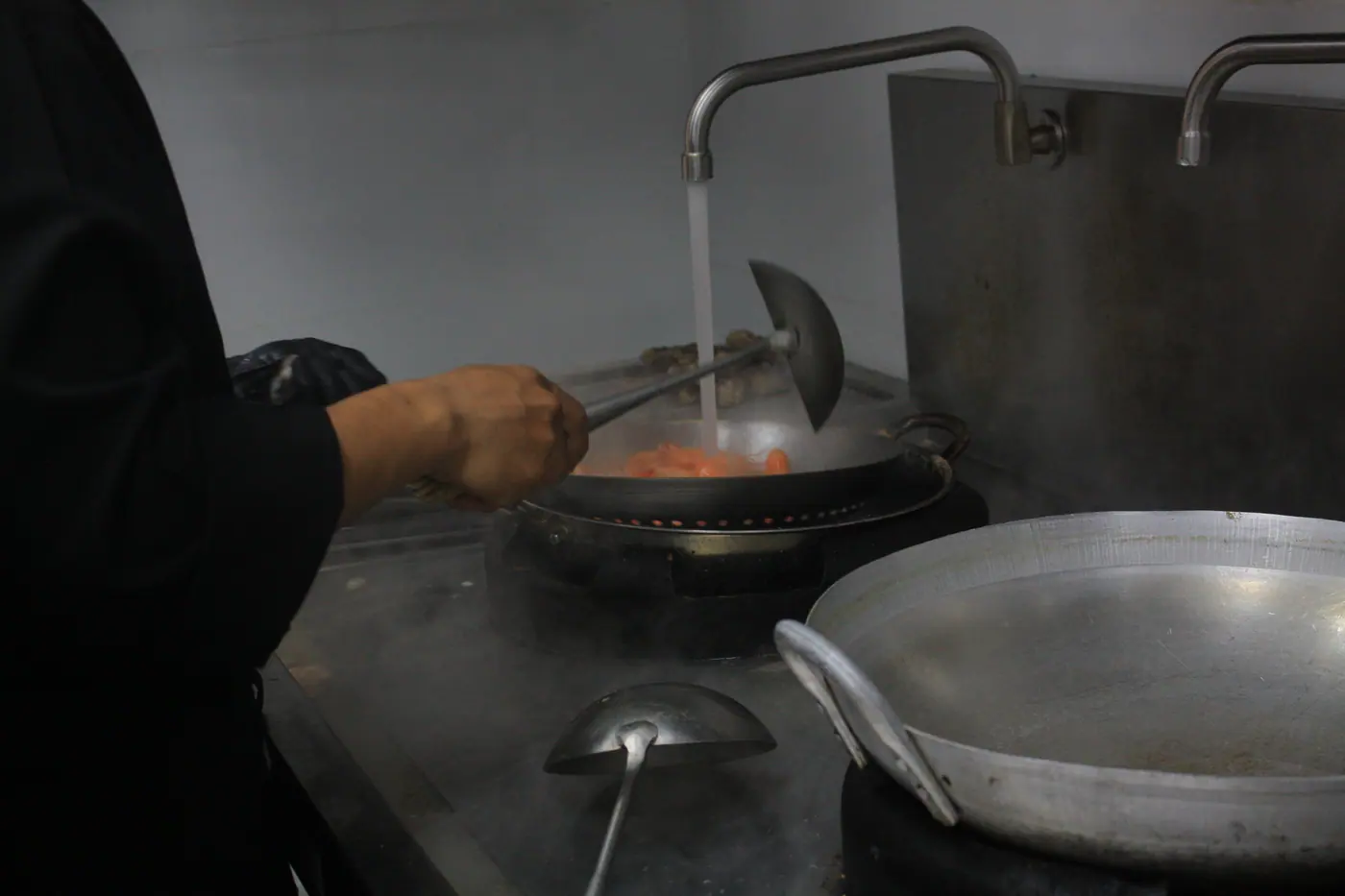
Fifteen Seconds in the Blanching Pot
The figures in this section are for you to try in your own kitchen; they do not describe the blanching process in a restaurant, where the pace of work and equipment are different.
Preparation:
- 500g fresh pho noodles for four bowls
- A separate blanching pot, always kept at a rolling boil
- A coarse mesh basket with a handle
- Four bowls pre-warmed with hot water
- Piping hot broth, ready to be ladled immediately
Steps:
- Loosen the noodle portion by hand so the strands separate; do not knead vigorously — broken strands are due to this step, not the water.
- Blanch in portions, ten to twenty seconds depending on freshness and thickness; blanching a large batch will drop the pot's temperature and require the noodles to stay in longer.
- Lift the basket, shake twice to drain, tap gently against the pot's rim, then tip directly into the warm bowl.
- Arrange meat and scallions on top, then immediately ladle in the piping hot broth.
If using dried pho noodles, completely change your approach: dried noodles haven't fully gelatinized, so they need to be soaked and then cooked, not blanched. Times vary by brand, and packaging instructions are more reliable than any general figures.
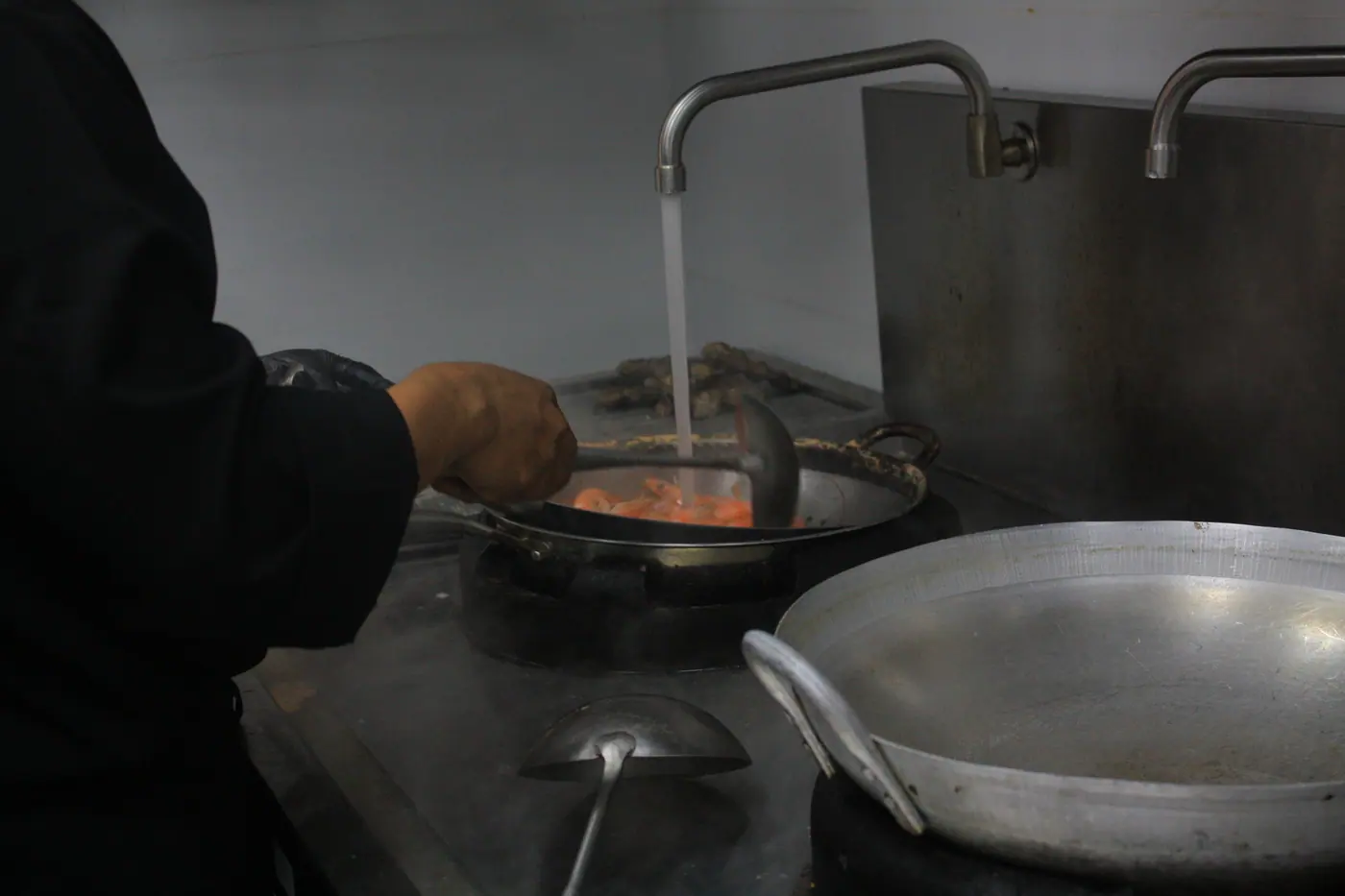
The Rhythm Between Blancher and Ladler
A cold bowl is a silent destroyer. Freshly blanched pho noodles placed into a cold bowl will immediately draw heat from the broth as soon as it touches, and as the temperature drops, the noodles continue to absorb water — only now, it's not hot enough to warm the meat slices on top. This is why pho kitchens rinse bowls with hot water before use, a seemingly superfluous action that actually buys back a few precious degrees.
The interval between the noodles leaving the blanching pot and the broth touching them is measured in seconds, and in a busy restaurant, it's a matter of coordination, not individual technique. Diners can easily observe this: if the bowl is just placed down and the strands are still separate, each standing distinct in the broth, the coordination is spot on. Strands clumped together usually indicate the noodles have been waiting.
For diners, there's a practical thing to know: the noodles don't stop cooking when the bowl arrives at your table. They are still absorbing. If you plan to eat and chat for a while, the noodles are what you should pick up first: they are the only component in the bowl that changes texture minute by minute, while the meat and broth do not.
The three other layers of a bowl of pho are covered in other articles: the broth pot, the sequence of experiencing the whole bowl, and how to order for first-timers. A list of pho bowls currently served on the 1st floor can be found in the Pho Cuon menu.
FAQ
Questions About the Noodles
- Can pho noodles be reused after being refrigerated overnight?
Yes, but they won't be quite like fresh noodles. At cold temperatures, gelatinized starch tends to re-arrange and contract, making the strands stiffer and more prone to breaking — similar to how leftover rice becomes hard. The way to handle this is to let the noodles return to room temperature, carefully loosen the strands, then blanch them a few seconds longer than usual, and accept a firmer texture than freshly made noodles.
- If the noodles turn mushy halfway through the bowl, are they of poor quality?
Not necessarily. The noodles continue to absorb water the entire time they are in the bowl, so a bowl eaten in seven minutes and one eaten in twenty minutes will have two different textures, even with the same portion of noodles. Thinner noodles are affected more noticeably than thicker ones. The simplest solution is to eat the noodles sooner, or accept that the end of the bowl will have a different texture.
- Are pho noodles and vermicelli (bún) the same thing, just shaped differently?
They share a rice origin but differ in process midway. Pho noodles are spread into sheets then sliced, resulting in strands with a flat, rectangular cross-section and a smooth surface. Vermicelli (bún) is extruded through a mold into round strands and often undergoes a fermentation step, giving it a slightly sour taste and a distinctly chewy-crisp texture. The two cannot be substituted for each other in the same broth.