THAI SIAM KITCHEN — THAI RESTAURANT IN AN THƯỢNG, ĐÀ NẴNG
Tom yum, som tum, Pad Thai, green curry, mango sticky rice — Thai Siam Kitchen brings the spirit of Ban Khun Mae to Furama Dining House, An Thượng, Đà Nẵng.

There are dishes that, with just one taste, immediately bring a region to mind.
A hint of sourness, a touch of spice, and the aroma of lemongrass in a bowl of tom yum are enough to evoke the markets of Bangkok. A plate of som tum with green papaya — sour, sweet, spicy, and salty all at once — transports one to Thailand's Northeast region. A hot plate of pad Thai tells a different story: that of street life. And mango sticky rice, with its soft glutinous rice and coconut milk, often concludes a meal with the very gentleness that people often associate with Thailand.
That is the spirit Thai Siam Kitchen brings to the 2nd floor of Furama Dining House.
It's not just about adding a few Thai dishes to the menu, but about creating a place where people can eat Thai food, learn more about Thailand, and feel the familiarity of a home-cooked meal.
Where is Thai Siam Kitchen?
The restaurant is located on the 2nd floor of Furama Dining House, Barett Urban Zone, 73 Trần Bạch Đằng, An Thượng area, Ngũ Hành Sơn, Đà Nẵng — opening on August 25, 2026.
This area attracts international tourists, foreigners living in Da Nang, young Vietnamese visitors, and tourists staying around My Khe beach. For those looking for a Thai restaurant in Da Nang, or a dinner spot in the Western Quarter, this is an address worth noting.
But the restaurant's character is not in its location. It begins with a simpler story.
Ban Khun Mae — “mother's home”
The concept of Thai Siam Kitchen developed from the spirit of Ban Khun Mae — 'mother's home'.
Before becoming one of the most widely known cuisines in the world, Thai food also started in the family kitchen. There was a mother preparing meals. There were familiar ingredients. There was a family meal. And there were people sitting together.
Vietnamese people easily empathize with that story. In Vietnamese culture, a family meal is not just for eating — it's a place to share stories of the day, and a dish is often linked to memories of one's mother, grandmother, or hometown.
This commonality makes the Ban Khun Mae story resonate naturally in Vietnam. The restaurant thus maintains the feeling of an intimate Thai kitchen: the flavors are distinct enough for those who have visited Thailand to recognize, but the space is comfortable enough for a Vietnamese family, a group of friends, or an international tourist to sit down together.
A Thai dining table starts with balance
The interesting aspect of Thai cuisine lies in the fact that many strong flavors can coexist.
Sour. Spicy. Salty. Sweet. Aromatic.
But whether a dish is good or not depends not on which flavor is strongest, but on how they balance each other. Tom yum can be spicy, but the sourness and herbal aroma should open up the dish rather than just leaving a hot sensation. Som tum maintains the crispness of green papaya amidst the spiciness of chili and the sourness of lime. And curry incorporates coconut milk, herbs, and spices into a rounder structure.
This philosophy means that a Thai meal should not usually consist of just one dish. The good way is for the whole table to order several different dishes: one spicy dish, one sour dish, one curry dish, a portion of rice or sticky rice — and then share them.
Tom yum — the flavor that makes the world remember Thailand
If one had to choose a dish to begin the story of Thai cuisine, tom yum is almost always mentioned first.
As soon as the soup bowl is placed on the table, the aroma of lemongrass, kaffir lime leaves, and the characteristic sourness create a very clear sense of Thailand. It's not the kind of dish that can be described by a single word 'spicy': after the spiciness, there's sourness, after the sourness, there's an herbal aroma, and the natural sweetness of seafood mellows the overall profile.
Here, seafood tom yum hotpot is the largest portion in this category — 395,000đ, suitable for a large group. For a more compact option, there's tom yum fried rice at 125,000đ, with the same aroma but served on a plate.
Som tum — a story from the Isan region
If tom yum is associated with the broad image of Thai cuisine, som tum brings diners closer to the life of the Northeast region — Isan.
Shredded green papaya. Chili. Lime. Spices. All are pounded together until blended but still retain their crispness.
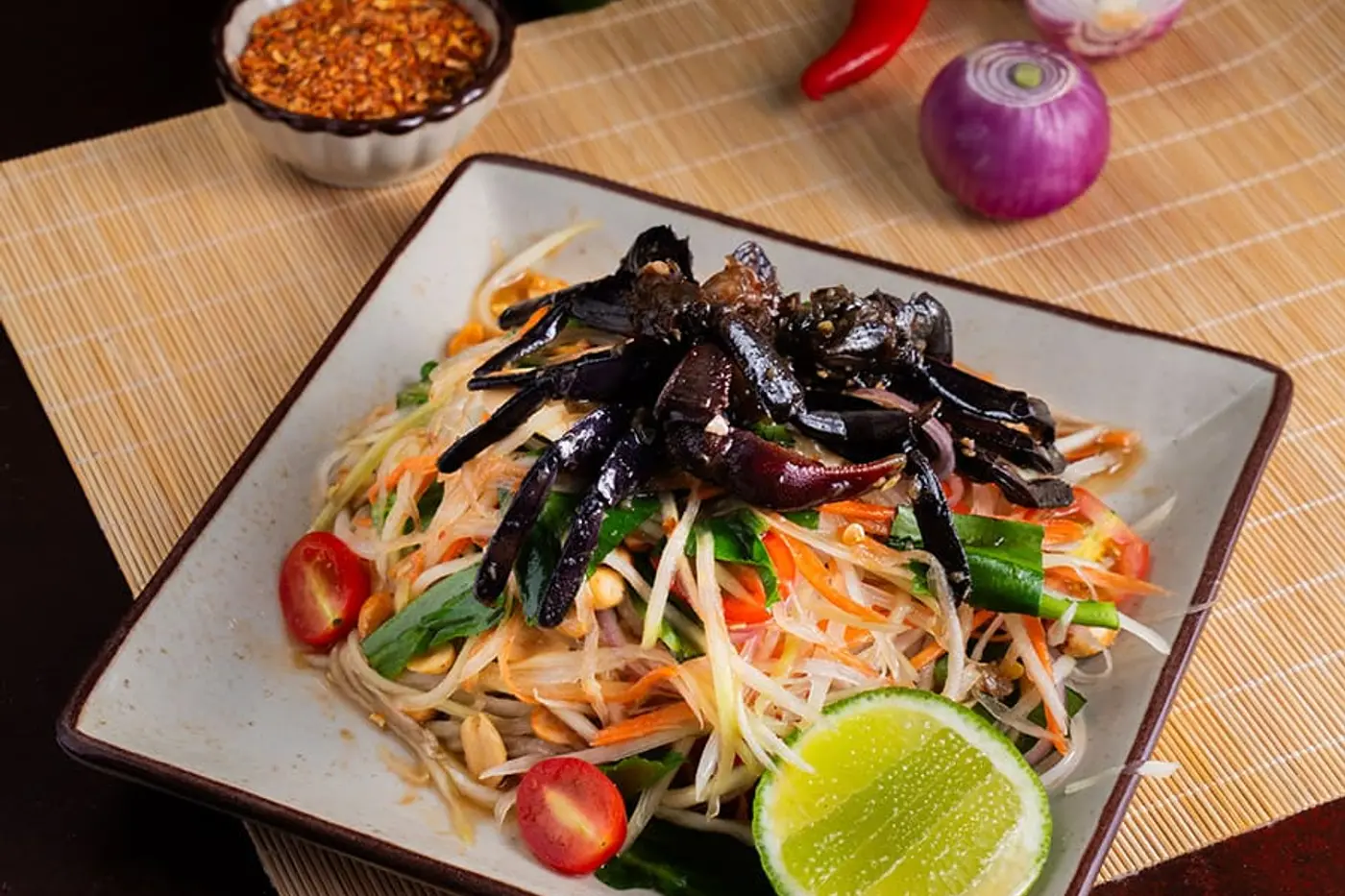
Som tum embodies a quite characteristic spirit of Thai cuisine: strong yet fresh. Spicy but not heavy. Sour but not harsh. Flavors are distinct, yet vegetables remain vibrant. Fresh shrimp som tum here costs 145,000đ.
Pad Thai — a street dish that went global
Some dishes have become part of a nation's identity, and pad Thai is an example.
Rice noodles stir-fried with ingredients and seasonings, balancing sweet, sour, salty, and rich flavors. What makes it easily loved probably lies in the fact that the dish clearly embodies Thai character yet is accessible to many palates. First-time eaters of Thai food often start here; those who are familiar still order it as a comfort food.
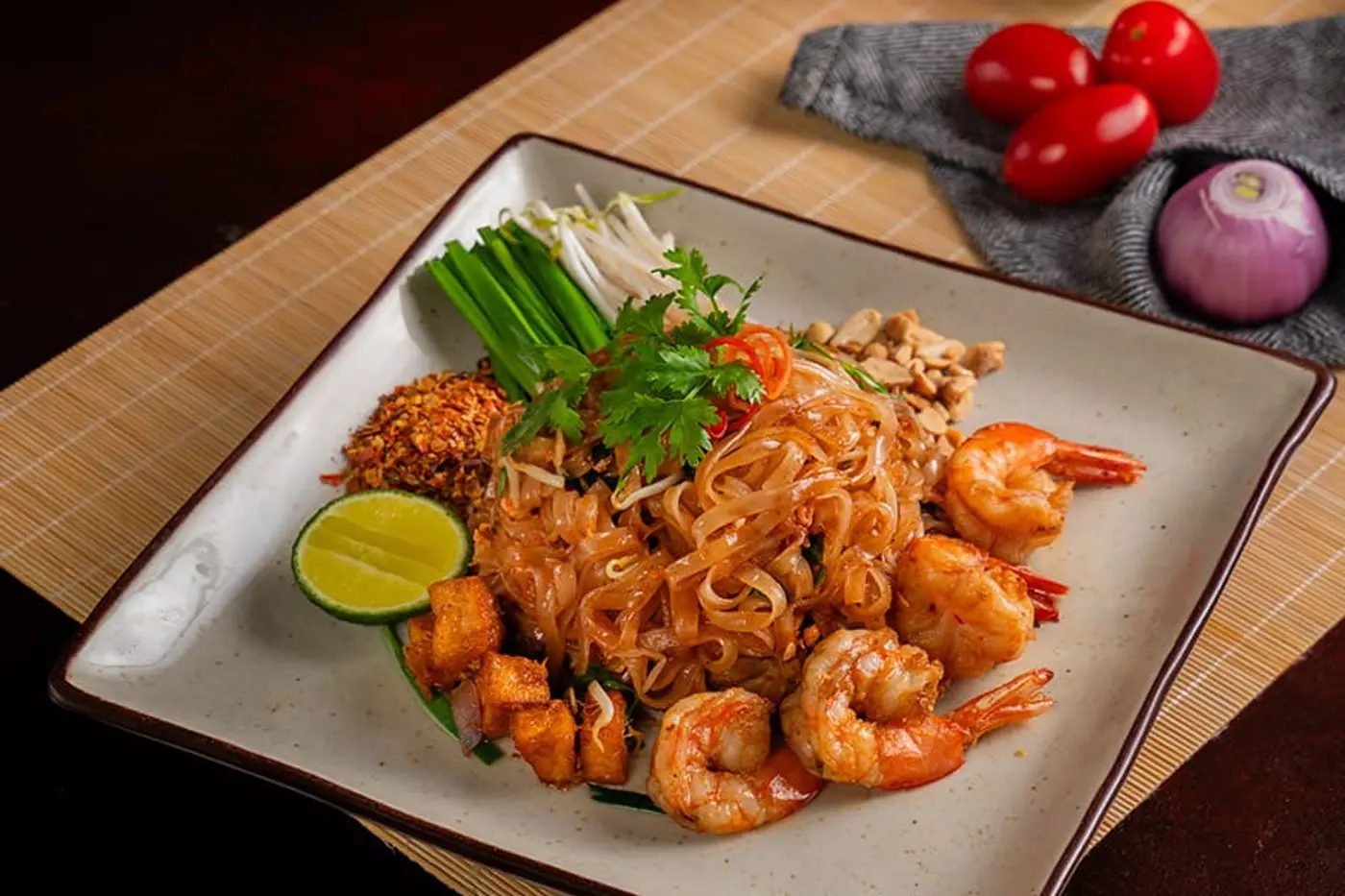
In an international tourist city like Da Nang, dishes like pad Thai also have an additional role: becoming a common language at the dining table. Korean guests know it. European guests have tried it. Vietnamese guests are increasingly familiar with it. Pad Thai at Thai Siam Kitchen costs 90,000đ.
Curry, fish, and dishes for sharing
Only eating tom yum and pad Thai means only traveling a short distance in the world of Thai cuisine.
Curry is another chapter — where coconut milk, herbs, and spices combine to form a sauce with depth. Thai-style green curry with shrimp here costs 165,000đ.
Alongside these are dishes suitable for placing in the middle of the table and sharing: crispy fried catfish with mango sauce at 185,000đ, steamed white pomfret with lime at 285,000đ, and pork skewers with coconut milk, served with sticky rice at 155,000đ.
This is also how Thai Siam Kitchen wants guests to experience it: eating together rather than individually.
Mango sticky rice — a very Thai ending
After a meal rich in sour, spicy, and herbal flavors, sometimes all that's needed is a light dessert.
Ripe mango. Sticky rice. Coconut milk. Not many ingredients, and it's this simplicity that makes it memorable — the sweetness of the mango, the chewiness of the sticky rice, and the richness of the coconut milk create a soft finish after dishes with strong flavors.
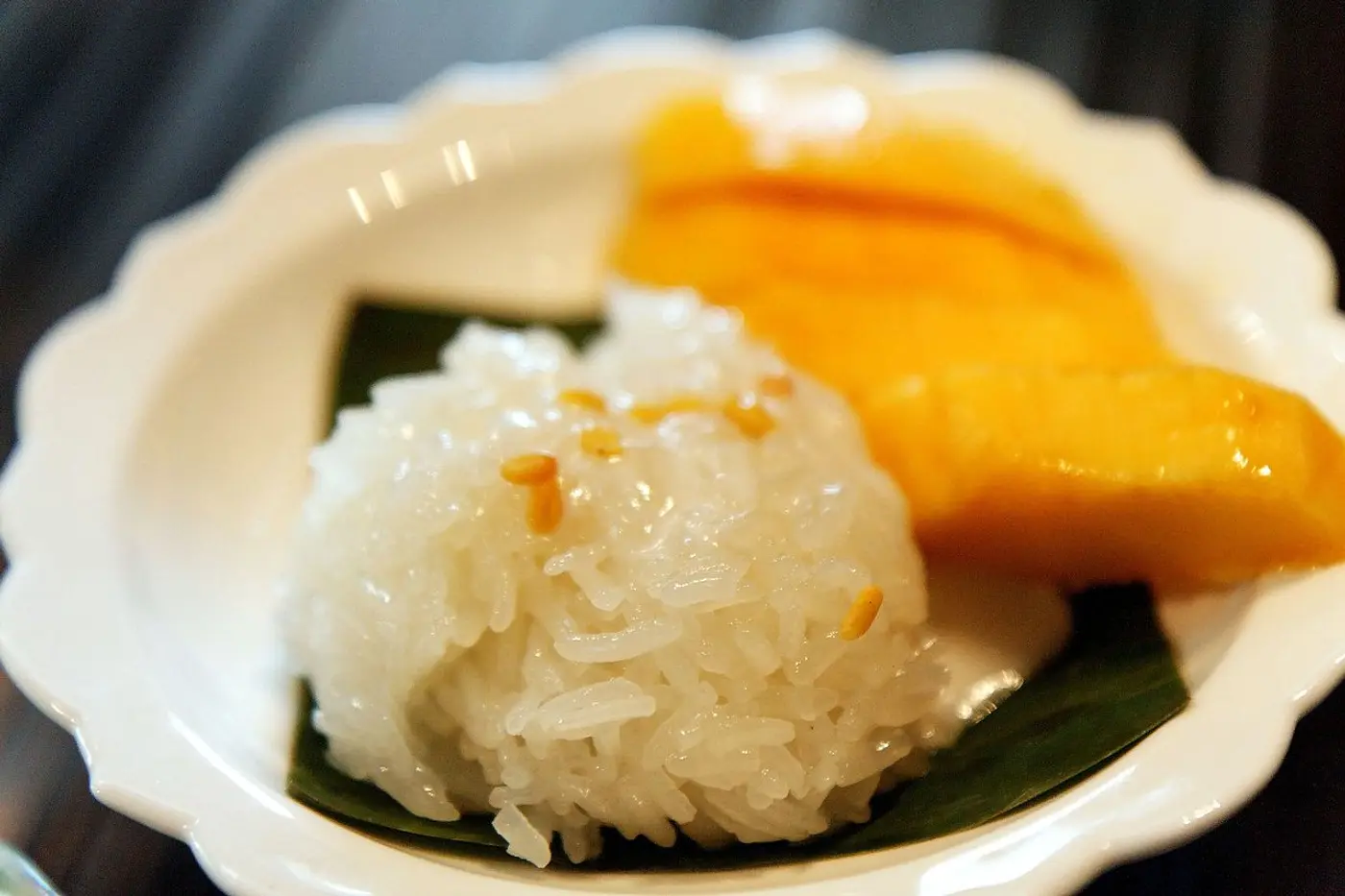
Many tourists know this dish even before knowing the names of other Thai dishes. This speaks to the power of cuisine in shaping a nation's image: a dish sometimes becomes a sensory postcard. Mango sticky rice here costs 75,000đ.
Why a Thai restaurant suits Da Nang
Da Nang today is not just a city with appealing local dishes. It is also an international tourist city: on any given day, on the streets around My Khe and An Thượng, one can encounter Vietnamese, Korean, Japanese, Chinese, European, Australian, and Russian visitors.
Tourists coming here, of course, want to eat Mì Quảng, bánh tráng cuốn thịt heo, seafood, or bún chả cá. But if they stay for many days, they also want to change their palate. One day Vietnamese food. One day steak. One day Japanese. One day Thai.
A good tourist city does not necessarily only have local dishes. It needs to be confident enough in its own identity to simultaneously welcome other cuisines. That is the context for Thai Siam Kitchen to find its place in An Thượng.
The menu on the website can be read in Vietnamese, English, Korean, Japanese, and Russian — view here.
The 2nd floor in a four-story house
Thai Siam Kitchen is part of a larger story: Furama Dining House is not a single restaurant, but a four-story house, with each floor featuring a different cuisine.
The 1st floor is Phố Cuốn with rolls and Vietnamese dishes, opening on August 22. The 2nd floor is Thai Siam Kitchen, opening on August 25. The 3rd floor is Steakhouse The Fan, opening on August 28. And the 4th floor is Hura Izakaya, opening on August 31.
Guests enter one location but find four experiences. One day they return for Vietnamese food. Another evening they try steak. Another occasion they ascend to a Japanese atmosphere. And today, the 2nd floor is a small trip to Thailand.
One House — Four Flavours. At Thai Siam Kitchen, that flavor is not just in the food. It is also in the story.
A meal can bring us closer to a country
There's no need to turn a restaurant into a museum to talk about culture. Sometimes, it's enough to simply prepare a dish well, place it on the table, and tell a small, accurate story: where som tum comes from, why tom yum balances sour and spicy, what Thais eat with curry, or why family meals are important in their culture.
From such small things, the distance between a Vietnamese diner and another country shortens.
That is also the idea behind the message the restaurant pursues: Every Meal Brings You Closer to Thailand. Each meal brings you a little closer to Thailand — not necessarily by a flight, sometimes just by a hot bowl of tom yum, a plate of som tum, a portion of pad Thai, or a slice of ripe mango eaten with sticky rice and coconut milk at the end of the meal.
Amidst a Da Nang that is increasingly international yet clearly retains its Central Vietnamese identity, Thai Siam Kitchen adds another flavor to that dining table. A bit of Bangkok. A bit of Isan. A bit of memory of Thai family kitchens. And all are placed in a 'home' in the heart of An Thượng.
Book a table at Thai Siam Kitchen
THAI SIAM KITCHEN — EVERY MEAL BRINGS YOU CLOSER TO THAILAND
2nd Floor, Furama Dining House
Barett Urban Zone, 73 Trần Bạch Đằng, Ngũ Hành Sơn, Đà Nẵng
One House, Four Flavours. Go up a floor, go up a mood.
#ThaiSiamKitchen #FuramaDiningHouse #OneHouseFourFlavours #ThaiFoodDaNang #AnThuong #DaNang