Poached egg in pho
Adding a poached egg makes the broth richer and milder. However, as the egg is not fully cooked, it might not be for everyone.

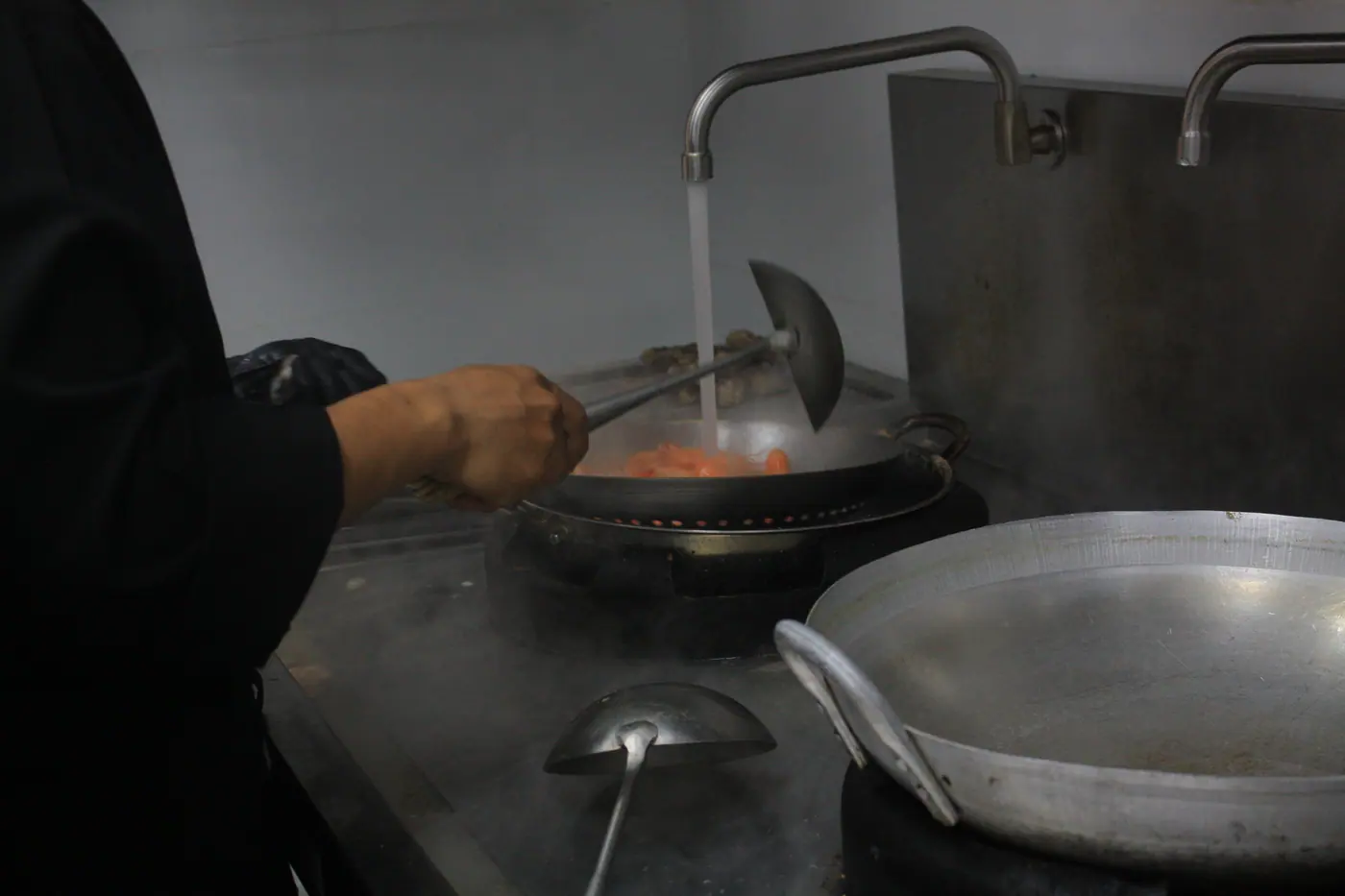
Next to the large broth pot, there's a smaller one, with crystal-clear water gently simmering at the bottom. The egg is cracked into a bowl, left for a few seconds for the thinner egg white to separate, then gently slid onto the water's surface. The egg white closes around the yolk like a pulled-up cloth. A slotted spoon lifts it out, tilted to drain, then placed on top of the bowl.
Quick Answer: A poached egg makes the broth richer and milder in the final spoonfuls, as the yolk gradually dissolves into the liquid. However, a poached egg with a runny yolk is not fully cooked — pregnant individuals, young children, the elderly, and those with compromised immune systems should opt for a well-cooked egg. Please ask the restaurant about the doneness level served when ordering.
What an egg does for a bowl of broth
The success of poaching an egg lies in a small temperature difference. Egg whites begin to set between sixty-two and sixty-five degrees Celsius, while yolks only thicken a few degrees higher. This small gap is where the poaching technique exists: the water is kept at a gentle simmer, around eighty to eighty-five degrees Celsius, just enough for the egg white to set while the yolk remains soft. Rolling boiling water would break the egg white into strands before it has a chance to set.
The freshness of the egg affects the outcome more than any trick. Fresh eggs have a higher proportion of thick egg white, so it clings neatly around the yolk. Older eggs have an increased amount of thin egg white, which spreads out into thin strands in the pot, resulting in a ragged-looking poached egg, though the taste remains the same. The trick of cracking the egg into a bowl first and letting the thinner part drain away is the correct way to address this issue.
In a bowl of pho, the yolk is what truly works its magic. It's an emulsion rich in fat and lecithin, so when broken, it disperses into the broth instead of forming a film: the broth becomes slightly cloudy, softens the salty edge, and coats the noodles more thickly. This effect is concentrated towards the end of the bowl, once the yolk has had time to dissolve — that's why a bowl of pho with an egg tastes most different in the last five spoonfuls, not the first.
From the kitchen's perspective, the egg is always added last, just before serving. A poached egg continues to cook in hot water, so every minute of waiting means the yolk thickens further.
What doneness is safe, and who should be cautious
This is where we need to be direct, not roundabout. The common food safety recommendation is to cook eggs until both the white and yolk are firm, or for dishes containing eggs, to cook them to seventy-one degrees Celsius; the U.S. food safety agency's safe temperature chart specifies this benchmark. A poached egg with a runny yolk, by definition, does not meet this standard.
That doesn't mean everyone must avoid it. It means the risk is not zero, and there are groups who should choose a well-cooked egg: pregnant individuals, young children, the elderly, and those with compromised immune systems due to illness or medication. For these groups, the trade-off between a runny yolk and the risk of bacterial infection is disproportionate.
There's a common misconception worth clarifying: many believe that a piping hot bowl of broth will "finish cooking" the egg. In reality, the temperature of the bowl drops very quickly after being filled, and the remaining heat is insufficient to bring the yolk past the safe threshold. A bowl of pho warms the egg; it does not replace cooking the egg thoroughly.
At home, control is in your hands: keep eggs refrigerated, crack them into a separate bowl to check for abnormalities before adding to the pot, wash your hands after touching the shell, and if cooking for someone in a high-risk group, ensure the egg is fully cooked. In a restaurant, control lies with the kitchen, so if the doneness level is important to you, please specify when ordering instead of guessing.
How an egg changes the morning rhythm
Adding an egg to a bowl of pho is a small change in ingredients but quite noticeable in the eating rhythm. The bowl becomes fuller, and people eat more slowly — they have to decide whether to break the egg or leave it whole, and if breaking it, when. It transforms a fifteen-minute breakfast into a twenty-minute breakfast, and for many, that's exactly what they're looking for.
There's a regional detail worth noting: the custom of eating pho with a poached egg is more distinctly observed in Central Vietnam, while in most other places, the egg is an add-on and not part of the name of any pho bowl. This means it's always the diner's personal decision — no kitchen will add it by default, and there's no "correct bowl" to compare against.
To understand why the added richness changes so much, the story of the broth pot explains the structure; the sequence of experiencing a bowl of pho follows the bowl from serving to the last spoonful; and for what to add and how to adjust, the article for first-timers provides more specific details than this one. Phố Cuốn Restaurant's page has the current menu for the 1st floor.
FAQ
FAQs about poached eggs
- Where does the risk lie with a runny yolk?
The risk is that bacteria potentially present in the egg may not have been destroyed by heat, and there's no way to visually tell if an egg carries pathogens. For healthy individuals, the probability of encountering an issue is low; for pregnant individuals, young children, the elderly, or those with compromised immune systems, the consequences, if they occur, are much more severe, making a well-cooked egg a sensible choice.
- Is hot pho broth enough to cook an egg dropped into it?
No. The temperature of the bowl drops very quickly right after being filled — the ceramic bowl absorbs heat, the pho noodles absorb heat, and the surface continuously radiates heat. The remaining heat is enough to warm the egg and slightly set the egg white, but not enough to bring the yolk past the safe threshold. If a well-cooked egg is desired, it must be cooked thoroughly in the pot.
- Should I break the egg into the broth or leave it whole?
Both are acceptable and yield two different results. Leaving it whole allows you to experience the distinct texture of the soft egg white and creamy yolk, while the broth maintains its clarity. Breaking it allows the yolk to disperse into the broth, making the entire bowl richer and milder but cloudier and losing some of the broth's original flavor. If you want both, taste the broth first before breaking the egg.