Vũ Bằng on Pho: Why is it called "the fundamental gift"?
For Vũ Bằng, phở was not a main meal but a gift of the morning. How Vietnamese writing names a bowl of phở says more than a recipe does.

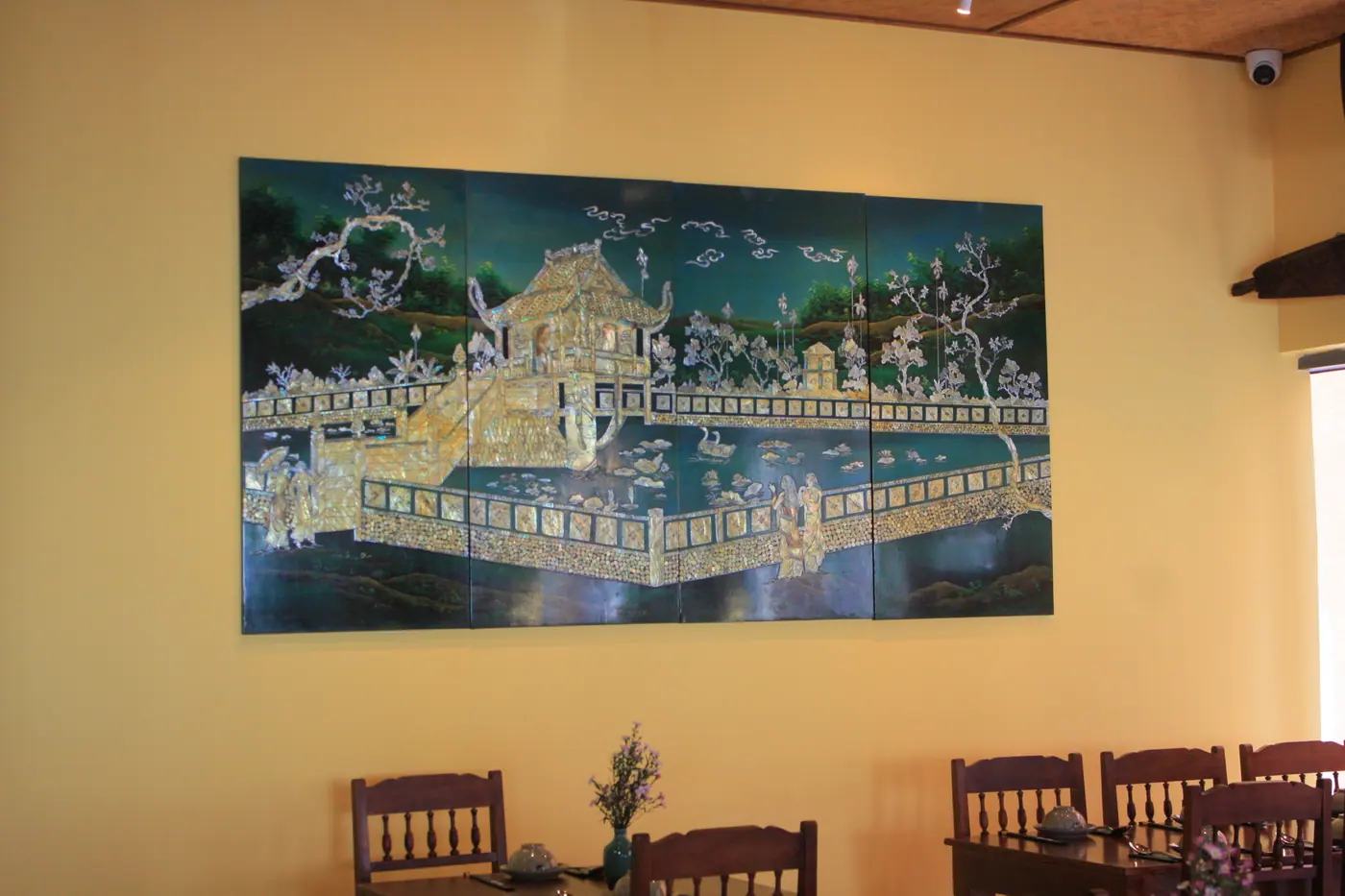
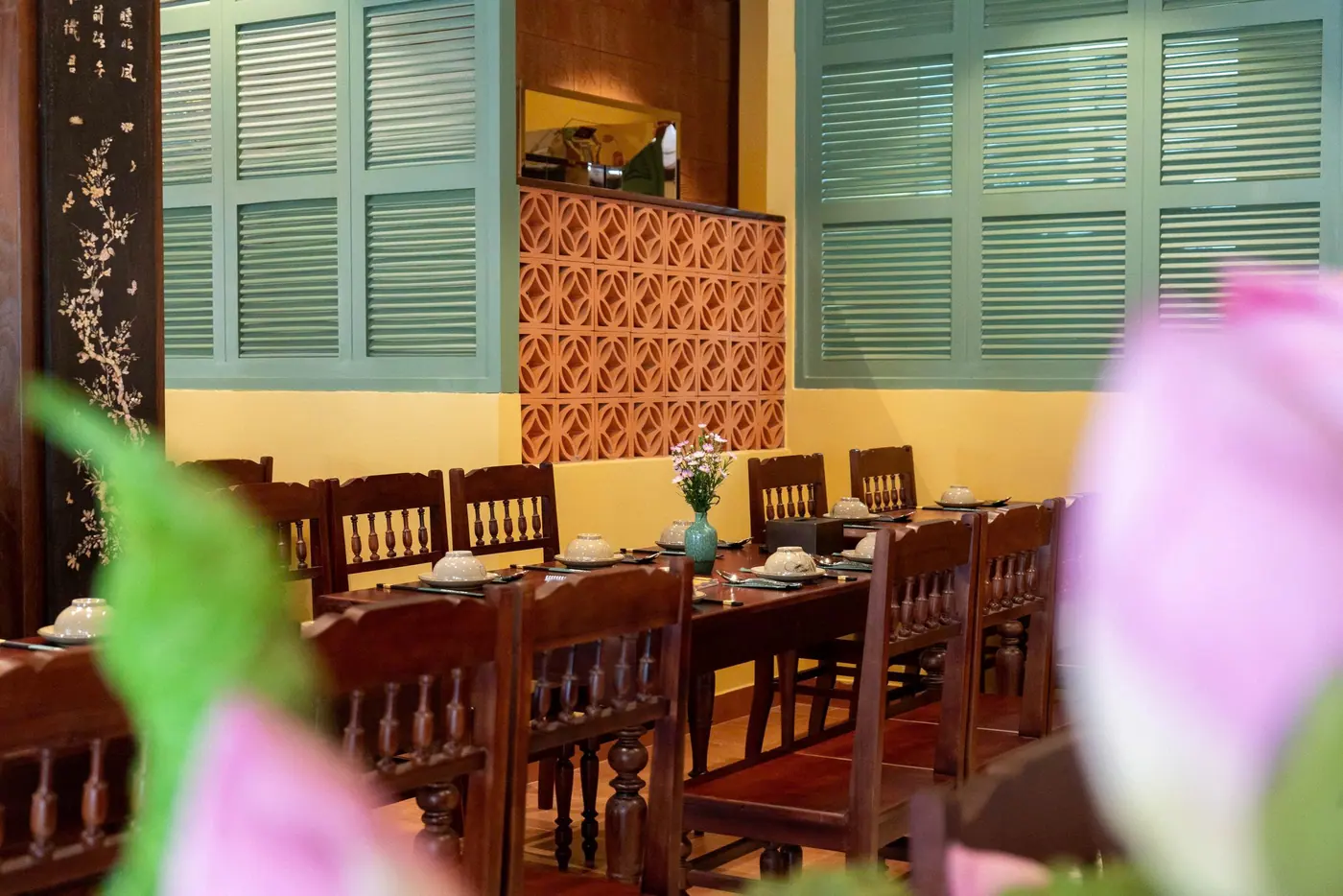
On the inner wall, there's a painting of old town rooftops and gables, hung right above a row of wooden tables. On a quiet afternoon, light streaming in from the door illuminates the dark ink of the painting. A guest sits beneath it, their bowl of pho nearly empty, and on the table, a thin, worn-spined book.
Quick Answer: In his collection of essays Miếng ngon Hà Nội (Hanoi Delicacies), Vũ Bằng dedicated an entire chapter to pho, titling it "Phở Bò — Món Quà Căn Bản" (Beef Pho — The Fundamental Gift/Snack). The word "quà" here carries its old Northern Vietnamese meaning: a dish eaten outside of main meals. As for "căn bản" (fundamental), it doesn't mean simple — it refers to pho's foundational place in daily life, something everyone has eaten and everyone has their own opinion about.
A chapter named "the gift/snack"
Miếng ngon Hà Nội was written during the period when Vũ Bằng had left Hanoi and was living in the South, and it is a collection of writings based on memory rather than on-site observation. This is important for how we read it: it's a portrait of a city through one person's nostalgia, not an ethnographic record. The sweetness in the prose partly stems from this distance.
The word "quà" is where modern readers are most likely to misunderstand. In the Northern Vietnamese dialect of that era — traces of which remain in phrases like "quà sáng" (morning snack), "hàng quà" (snack vendor), "ăn quà" (to eat a snack) — this word doesn't mean a gift, but rather food eaten outside of main meals. Calling pho "quà" means categorizing it as a dish eaten away from the family meal, at a street stall, between meals, or simply for pleasure. Read in its modern sense, the phrase "món quà căn bản" (fundamental gift) sounds like a cliché compliment; read in its correct old meaning, it's an observation about the dish's social standing.
Vũ Bằng was not alone in bringing pho into Vietnamese prose. Thạch Lam wrote about pho in Hà Nội băm sáu phố phường (Hanoi's Thirty-Six Streets), considering it a special delicacy of Hanoi. Nguyễn Tuân even dedicated an entire essay titled Phở. Three individuals, three distinct voices, yet all doing the same thing: elevating a street food item into a worthy subject for writing. At that time, choosing a street snack as the topic for an essay was not a very common choice.
Three things those writings illuminate in a bowl of pho
The interesting thing is that these literary pieces don't teach you how to cook. They do something else, perhaps more difficult: they provide diners with a vocabulary to describe what they are tasting. Three things are mentioned most frequently, and these three things remain the three axes Vietnamese people use to discuss a bowl of pho today.
- Noodles. What's noted isn't their chewiness, but their texture and how they lie in the bowl — soft, not clumpy, not mushy. This is a purely sensory criterion, read by chopsticks and mouth, not by any numbers.
- Meat slices. Thin, just right, skillfully cut. There's no discussion about which part of the cow, but rather about the knife hand — indicating that at the time, slicing meat was considered part of the craft, not a secondary task.
- Broth. The most important axis, and also where literature leaves its clearest legacy: the pair of words "ngọt" (sweet) and "thanh" (clear/light) go together. Sweet without being harsh, rich without being heavy — a demand for balance, not intensity.
These three criteria are worth preserving, but with a caveat. They represent the palate of one person, in one city, during a specific period, and written from afar. They are not mandatory technical standards for all pho styles today, and using them as a yardstick to rate every bowl of pho is a misreading of the genre — an essay is not a standard.
Rereading the pages at a Da Nang dining table
Someone sitting in Da Nang today eats a bowl of pho that has traveled through paths Vũ Bằng did not live to see. That bowl might have a plate of herbs on the side, it might be sweeter than the bowl he remembered, and that doesn't make it wrong. What endures through all these changes is the language itself. A phrase like "sweet without being harsh" isn't tied to any specific bowl of pho: it simply states that if one quality reaches a certain point, another should not exceed it, so any bowl can be examined through this lens — Vũ Bằng's Hanoi bowl, and even the Da Nang bowl he never saw. Add another similar pair that he didn't write, such as "rich without being cloying," and it still works the same way. That's why the language about food outlives the cooking recipes themselves.
The word "quà" also explains a living habit that persists to this day. After finishing a bowl of pho, very few people say they just had lunch: a bowl of pho fills you up but doesn't take the place of a main meal, and people still categorize it as an in-between-meal snack. This classification existed before Vũ Bằng wrote about it — he merely named it — and it's why pho can be found at almost any hour, with no hour considering it a main meal.
If you want to trace the dish rather than the words, the journey of pho from North to Central Vietnam is the article for that. To understand where the phrase "thanh" (clear/light) often used by writers actually comes from in the pot, the array of cinnamon, star anise, and cardamom explains the technical aspect, while the sequence of experiencing a bowl of pho follows the exact order a diner encounters their bowl. The pho currently served on the 1st floor is part of the Phố Cuốn menu.
FAQ
Around the words of a chapter
- Where does the phrase "món quà căn bản" come from?
It is the title of a chapter in Vũ Bằng's collection of essays Miếng ngon Hà Nội: "Phở Bò — Món Quà Căn Bản" (Beef Pho — The Fundamental Gift/Snack). This phrase is not an honorific or a ranking; it is the title of a book chapter. So, when you encounter it used as a general compliment, you can remember that its origin is a title — and the original meaning of the word "quà" within it is much narrower than how people often borrow it today.
- Did Nguyễn Tuân and Thạch Lam write about pho similarly to Vũ Bằng?
The same dish, but three different perspectives. Thạch Lam wrote briefly, categorizing pho among Hanoi's street delicacies. Nguyễn Tuân dedicated an entire essay titled Phở, with an elaborate and argumentative tone about every detail. Vũ Bằng wrote from afar, with a nostalgic voice. Therefore, quoting one person and claiming it's "Vietnamese literature's view on pho" is to conflate three distinct approaches.
- When praising pho broth as "thanh," what are you actually praising?
"Thanh" stands in opposition to two things: "gắt" (harsh/sharp) and "nặng" (heavy). A "thanh" broth is sweet without a sharp edge on the tongue, rich without leaving a heavy sensation in the back of the throat after swallowing. This is a writer's word, not a cook's — it describes a composite sensation, so two people can perfectly use the same word to praise two very different bowls.