What is the experience of a bowl of pho like?
Heat first, then star anise and cinnamon, and only then the first spoonful. A bowl of phở reaches the eater in the order of the senses.

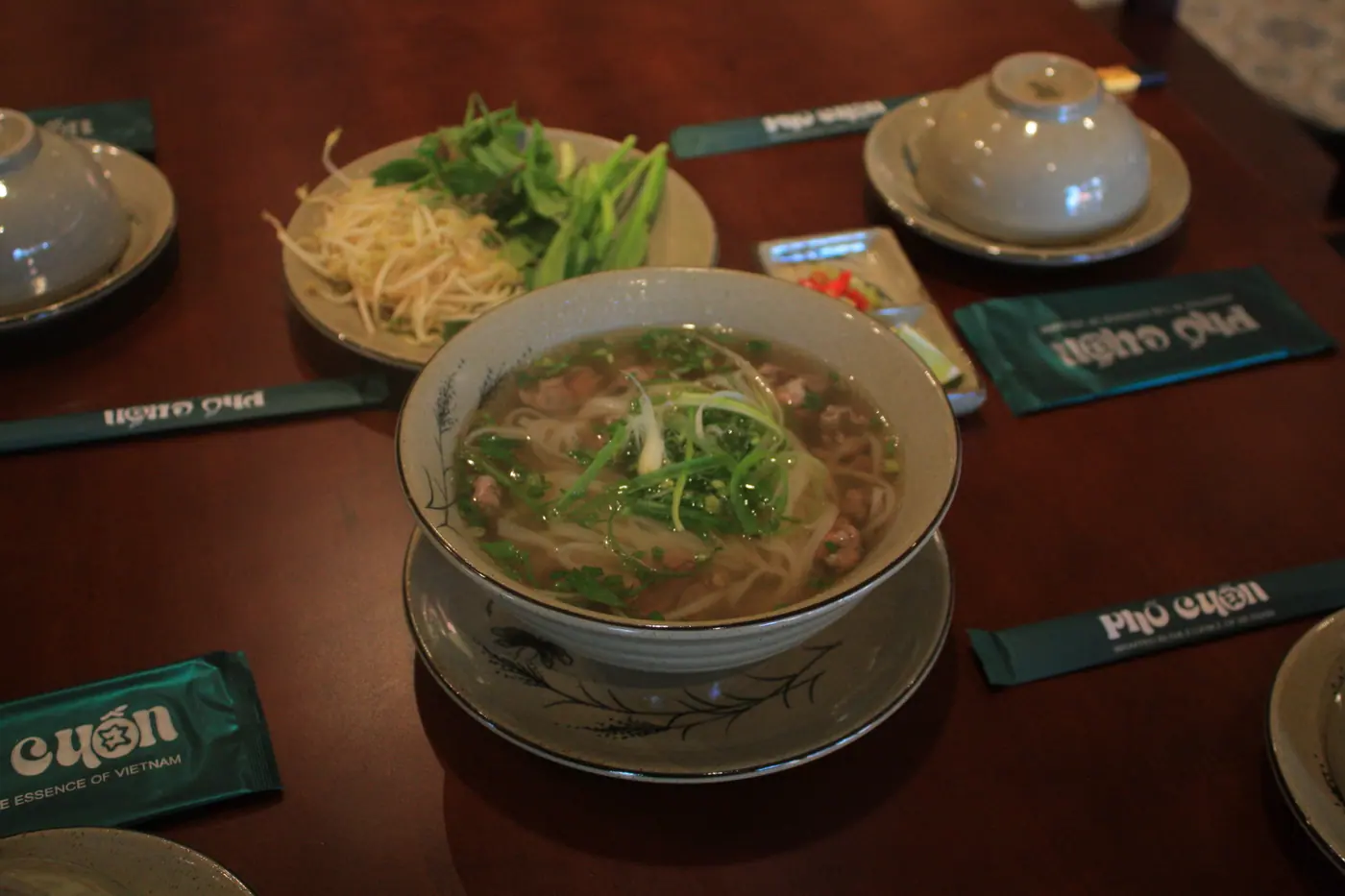
The bowl travels through the dining room on a tray, and the diner at the table recognizes it before it arrives: a thin column of steam rises straight up, then bends towards the ceiling fan. The tray is lowered, the bottom of the bowl meeting the wooden table with a soft clink. From that moment until the last spoonful of broth, it's usually fifteen minutes, and those fifteen minutes are anything but still.
Quick Answer: A bowl of phở doesn't arrive all at once. The heat comes first, the surface of the bowl second, and then the first spoonful of broth — which is often the least communicative spoonful, as your tongue is busy with the heat. The most "readable" bowl is found between the third and sixth minute, and the last spoonful is almost an entirely different bowl from the first.
A bowl of phở is layered before it reaches you
The sequence you perceive is not random: it's a result of the assembly order in the kitchen. Noodles go into the bowl first, at the very bottom. Meat is layered on top of the noodles. Scallions and onions are sprinkled on top of that. The broth is added last, poured from above. This means that what's closest to your eyes and nose — the onions, meat, and surface of the broth — is also what entered the bowl last and is the hottest.
From this, three things are immediately observable to the diner, without needing any kitchen knowledge. First, the first bite you pick up is almost always meat or onions, not noodles: the noodles are at the bottom and need to be stirred up. Second, the hottest part of the bowl is the surface, so if you want to enjoy the hottest portion, eat from the top down rather than stirring the entire bowl immediately. Third, when you stir, you're mixing a very hot layer with a cooler layer — the entire bowl drops to an average temperature sooner than if left undisturbed.
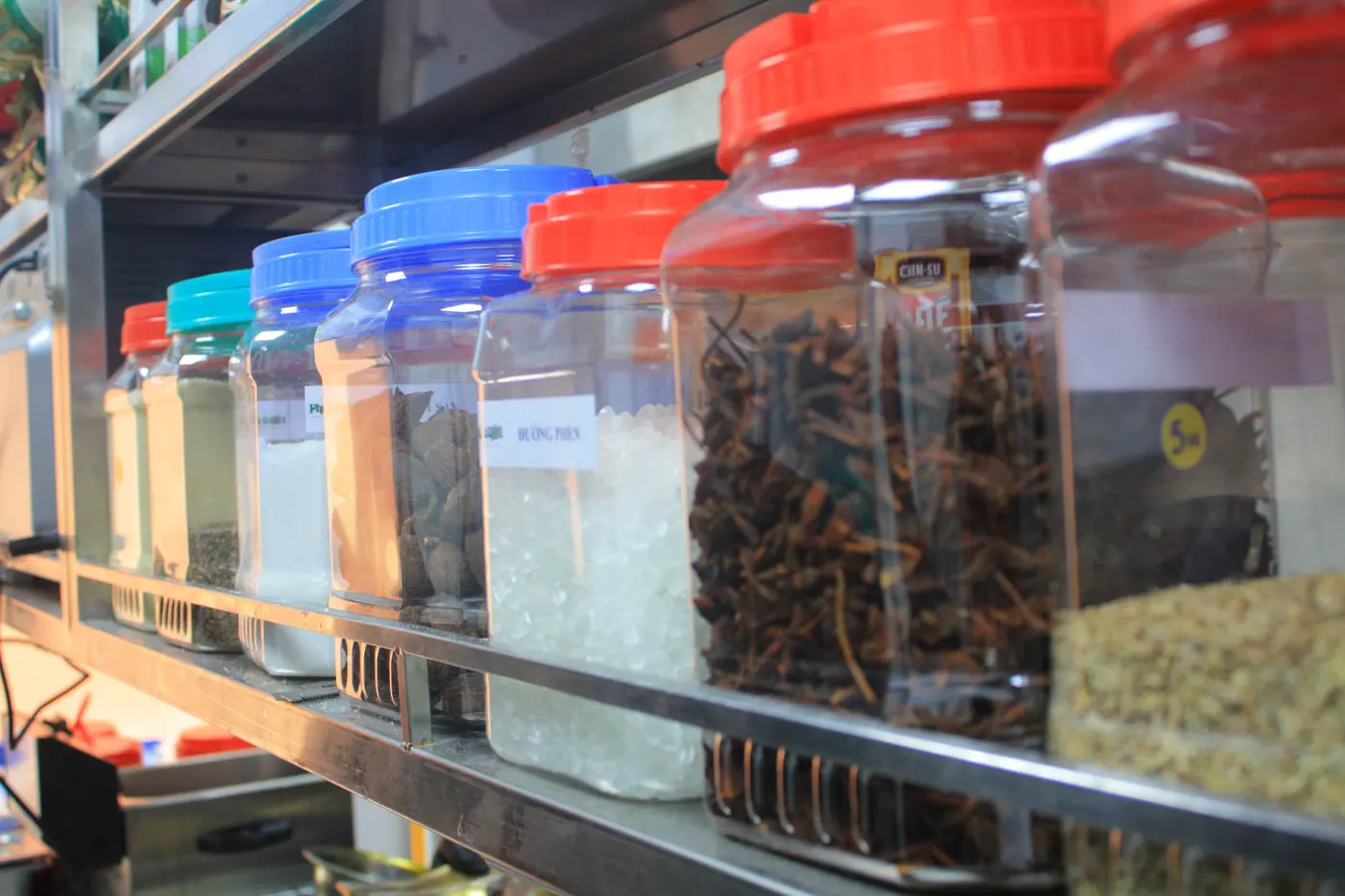
What arrives even before all of that is the aroma, and it comes when the bowl is still a distance from the table. Why the aroma precedes everything else and why star anise speaks before cinnamon is thoroughly explained in the aromatic profile of the broth; here, just remember that it's the first stage of the sequence, and it's the shortest.
The first spoonful of broth says less than the third
This is where many people feel a disconnect without understanding why. A freshly poured bowl is so hot that your tongue has to protect itself: you slurp quickly, holding the broth in your mouth for a very short time, and at that temperature, your tongue's ability to perceive flavors is diminished. As a result, the first spoonful often tastes blander than it actually is. Don't rush to conclude anything about your bowl from that spoonful, and don't squeeze lime in too quickly just because it seems bland.
The period between the third and sixth minute is when the bowl is at its most comfortable temperature: hot enough for everything to remain fragrant, cool enough for you to hold the broth in your mouth for a beat longer. If there's a moment to truly "read" your bowl, this is it. This is also the time to eat the meat, as thin slices of meat cool faster than the broth.
From about the eighth minute onwards, the bowl begins to change character. The noodles are no longer as firm as when first poured, due to their inherent structure. The layer of fat on the surface cools and clings to the sides of the bowl. The scallions have fully softened and release their aroma into the broth rather than standing alone. Nothing is "wrong" here; it's simply that you're eating a different bowl than the one initially placed before you.
And the last spoonful is almost always richer than the first. The broth at the bottom has passed through everything in the bowl: it has absorbed the juices released from the meat, the pepper and chili you added, and even the sunken scallions. Many people prefer these last few spoonfuls even more than the beginning of the bowl.
Enjoying a whole bowl without missing a layer
Combining this into an immediately usable rhythm: observe the surface of the bowl for a few seconds before touching it, taste a spoonful of broth, eat the meat while it's still piping hot, stir up the noodles to eat them sooner than you might think, and save a few final spoonfuls of broth instead of finishing it all in the middle of the meal. This rhythm isn't a rule, and no one is checking on you; it's simply a way to sequence your enjoyment so that each layer is encountered at its optimal state.
One more thing worth mentioning: a bowl of phở is a dish with a shelf life measured in minutes, so it's not suited for multitasking while eating. If your table is waiting for someone who hasn't arrived yet, ordering the bowl after they've sat down is a much better decision than ordering it beforehand "to avoid waiting."
If you want to understand what lies beneath this sequence, the broth pot is the foundation of the entire bowl. And if you've never ordered a bowl of phở before and want to know what to say to the staff, this guide for first-timers walks you through it step-by-step. Photos of the ground floor space can be found on the Phố Cuốn restaurant page.
FAQ
More questions about the rhythm of a bowl of phở
- Why does the first bite often taste blander than expected?
For two reasons combined. First is the heat: food that's too hot makes it difficult for your tongue to discern details, and you also hold it in your mouth for a very short time due to a self-preservation reflex. Second is the reference point: your mouth has just transitioned from a neutral state and has nothing to compare it to. The simple solution is not to adjust anything on the first spoonful — wait until the third spoonful before deciding whether to add lime or chili.
- Why is the broth at the bottom of the bowl richer than the first spoonful?
Because the bottom of the bowl is where everything settles. The meat juices released as you eat, the pepper and chili you've added, the scallions that gradually sink — all accumulate there. If you enjoy those last few spoonfuls, a small tip is not to stir the bowl while eating: allow that rich portion to form naturally at the bottom instead of mixing it evenly from the start.
- Does sitting in a breezy spot versus a sheltered spot change the phở experience?
Yes, and more significantly than people might think. In a breezy spot — by the door, under a fan, near an entrance — the surface of the bowl dissipates heat faster, shortening the time the bowl remains in its "readable" temperature zone, so you should eat at a quicker pace. In a sheltered spot, the bowl retains heat longer, and the aroma lingers around the bowl for longer. Neither spot is superior — they simply offer two different dining rhythms.