Beef Pho or Chicken Pho: Choose Your Favorite!
Two pots of broth for two kinds of sweetness: one deep and heavy, one clear and light. Choose by how your stomach feels that morning, not by habit.

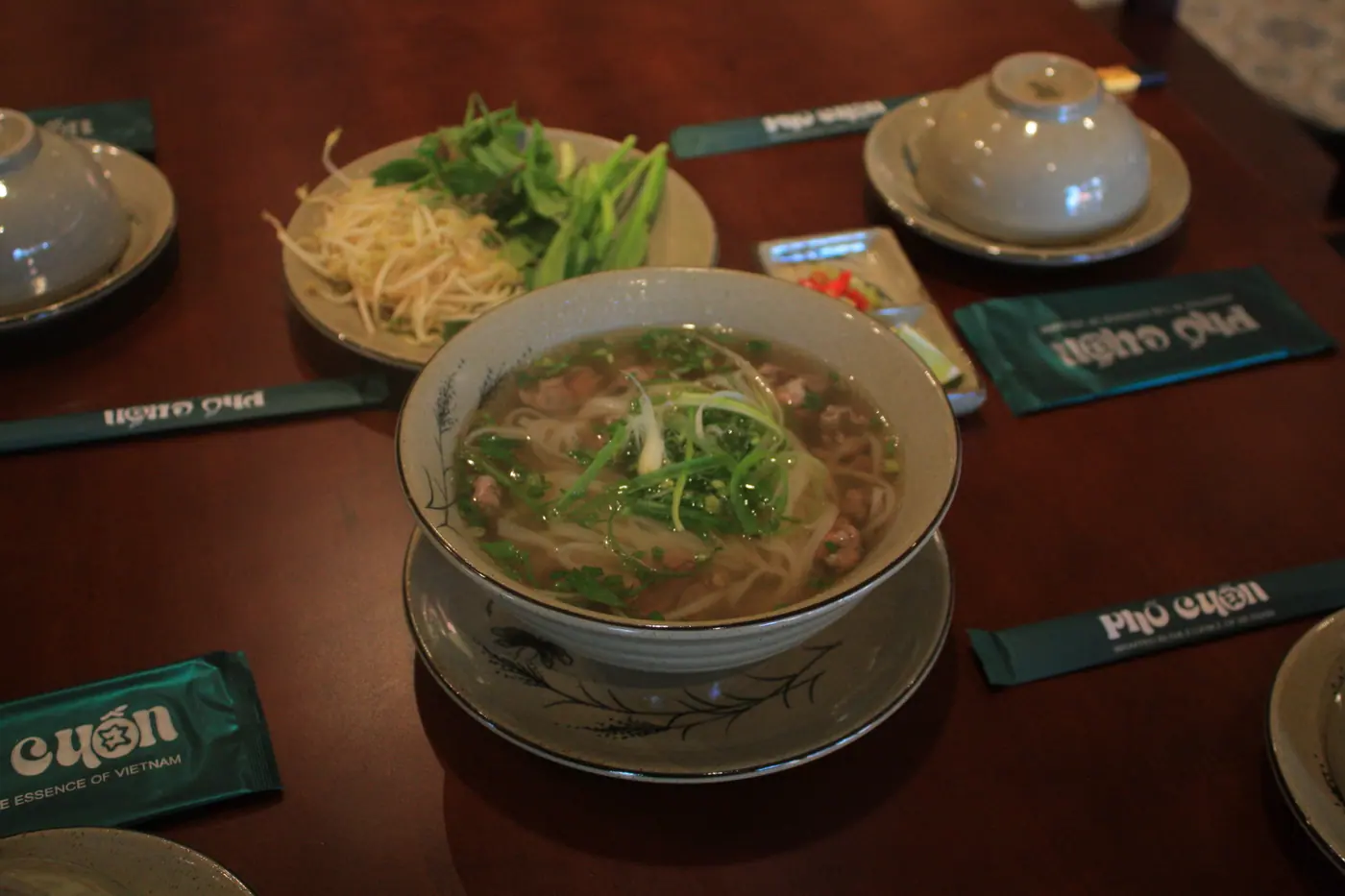
Two bowls were placed simultaneously on a table. The bowl on the left had a dark amber broth, with several large golden oil droplets floating on top. The bowl on the right was noticeably lighter, almost clear, with tiny oil specks floating and a more generous sprinkle of green onions. The two people sitting opposite each other ordered two different things, and neither made the wrong choice.
Quick Answer: Beef broth offers a deep, lingering flavor; chicken broth delivers an earlier, cleaner, and lighter finish. Choosing what your stomach desires that morning is the right way to go: those who had a rich, oily meal the day before, or are feeling tired, often find chicken pho easier to enjoy. Chicken Pho is 80,000đ, Chicken Thigh Pho is 100,000đ, while on the beef side, Beef Shank Pho is 80,000đ.
Chicken Pho and Beef Pho: A Different Kind of Sweetness
Both are sweet, but in two distinct ways, and this difference is immediately noticeable from the very first spoonful. The flavor of beef broth arrives slowly, richly, and lingers on your palate for a while after you swallow. The flavor of chicken broth arrives more quickly, is more delicate, then dissipates cleanly without leaving a heavy sensation. This isn't about intensity – a well-cooked chicken broth can still be rich – but rather about the length of the aftertaste. That's the first difference, and for most diners, it's also the most significant.
The second difference lies in the fat. Beef fat floats as large golden slicks on the surface of the bowl; chicken fat is lighter, appearing as tiny pale yellow specks that quickly dissolve when stirred. The practical result is that a bowl of chicken pho often leaves a "cleaner palate" feeling after eating, while a bowl of beef pho provides a longer-lasting sense of fullness.
The third difference is in the aroma profile. Beef broth typically uses a heavier hand with dried spices, enough to balance the robust flavor of the beef; chicken broth leans towards green onions, ginger, and fewer dried spices so as not to overpower the chicken's delicate taste. The role of cinnamon, star anise, and black cardamom is a topic for another article, but here, the key takeaway is simply: the two broths are seasoned with different aromatic intensities, so even their scents are distinct.
One thing to be clear about: "light" here refers to the sensation, not a nutritional claim. The specific portion sizes and ingredients of each bowl are up to the kitchen, and if you need exact figures or are avoiding certain ingredients, please ask the restaurant when ordering rather than inferring from the dish name.
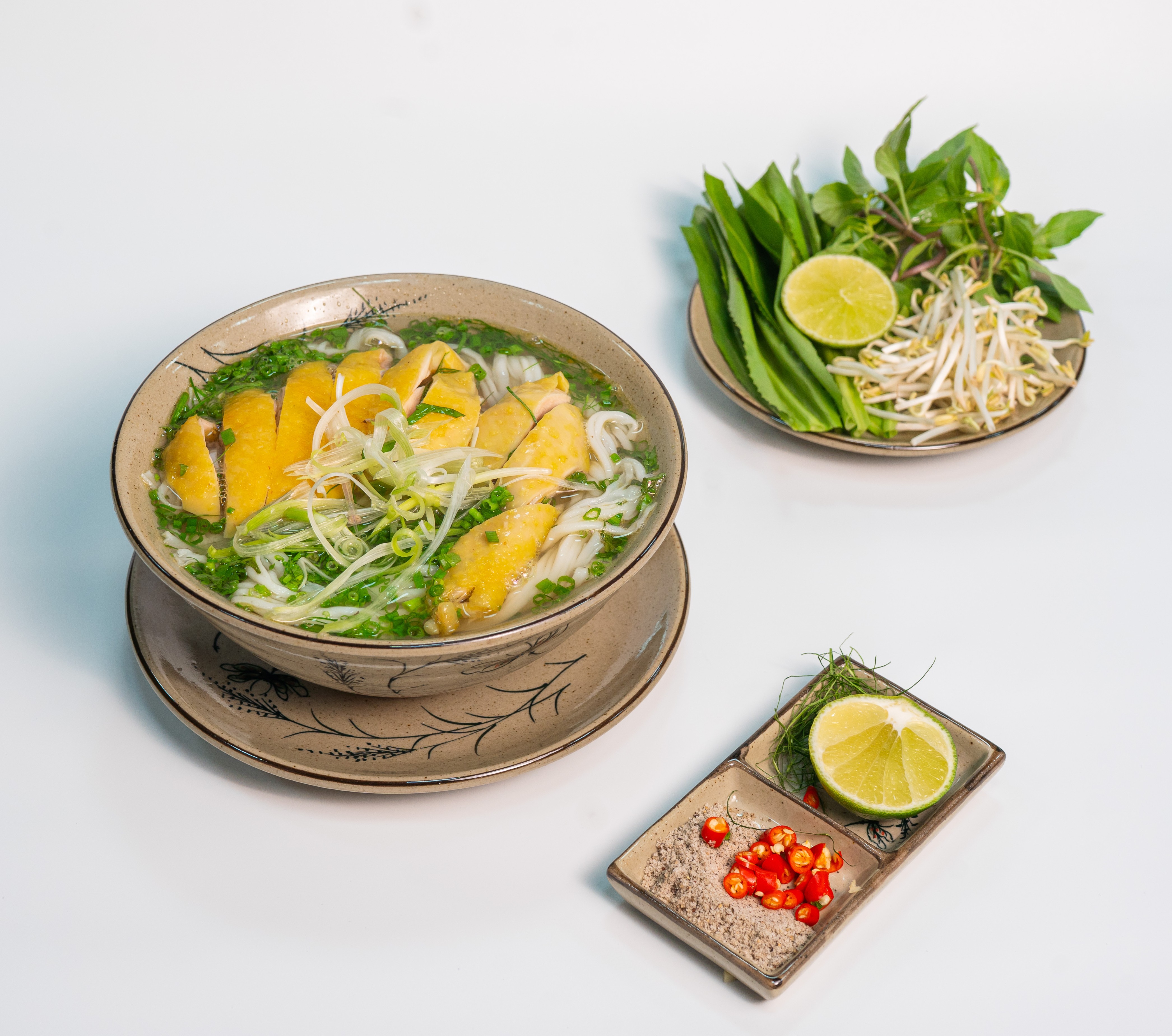
Regular Chicken Pho and Chicken Thigh Pho: It's All About the Meat
On the menu, there are two chicken options, and they differ precisely in the cut of meat, not in the broth: Chicken Pho for 80,000đ and Chicken Thigh Pho for 100,000đ. Generally, chicken thigh meat is darker, has a firmer texture, and more fat under the skin than breast meat, giving the thigh a richer and juicier feel, while the breast is softer and has a milder flavor.
This leads to a straightforward choice. If you find chicken pho often "lacks substance" – meaning you remember the broth but not the meat after eating – then the thigh portion can remedy that. If you prefer a lighter and more delicate bowl, or are ordering for someone with a smaller appetite, the regular chicken pho is a better fit.
Then there are details the dish name doesn't specify: whether the meat is chopped or shredded, if it includes skin, or if it has bones. Each kitchen prepares it differently and it can vary daily, so if these details are important to you – for example, if you don't eat skin, or are dining with small children and prefer no bones – then these are questions to ask when ordering.
When Everyone at the Table Wants Something Different
The most effective solution is also the simplest: don't try to find one type of pho that suits everyone. Let everyone have their own bowl as they wish, then pool shared items into other dishes – a plate of fresh spring rolls for the center of the table, or shared drinks. A bowl of pho is inherently a personal dish: it's served hot and meant to be eaten immediately, so sharing one bowl between two people spoils the very essence of what makes it good.
If your table has decided on beef and is now deliberating between different cuts, then this comparison of four beef cuts is the next article to read. If someone at your table has never had pho before, this step-by-step guide for first-timers is helpful. And if you want to understand why a broth can be both clear and rich, this article on broth techniques explains the technical aspects. Both beef and chicken varieties are available on the Pho Cuon menu.
FAQ
Common Questions When Deciding Between Beef and Chicken Pho
- Is Chicken Pho a Lighter Option?
For most diners, the post-meal sensation is indeed lighter, primarily due to less fat floating on the surface of the bowl and a shorter aftertaste. However, "light on the stomach" is a feeling, not a quantifiable measure: it depends on the amount of noodles, meat, and how quickly or slowly you eat. If you need precise ingredient information for health reasons, please ask the restaurant when ordering.
- Does Chicken Thigh Pho Come with Skin and Bones?
The dish name only specifies the cut of meat, not how it's prepared. Some kitchens leave the skin on, others remove it; some chop the meat with bones, others shred it. Since these details vary by kitchen and even by day, the only sure way to know is to ask when ordering, especially if you're ordering for small children or someone who prefers not to deal with bones.
- Which Pho Should I Choose for Dinner?
There's no rule against eating pho in the evening, and many people consider it a light dinner. If you're eating late and don't want to go to bed feeling heavy, the regular chicken pho is a more comfortable choice. If dinner is your main meal of the day, the beef option provides a longer-lasting fullness, and in that case, your choice of meat cut will be the deciding factor.